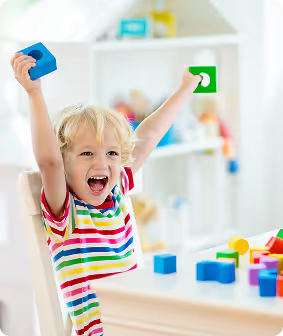
Infant Care in Yorkville: Inside the Infant and Toddler Rooms at Our East 91st Street Center

DATE
November 14, 2026

Sunshine Learning Center at 316 East 91st Street cares for babies from 6 weeks old, in infant rooms built for crawlers and new walkers, and in toddler rooms that come next. If you live or work on the Upper East Side and are starting to look at infant care, here is what the rooms and the day look like at our Yorkville center.

Where we are

Our 91st Street center is in Yorkville, a short walk from Carl Schurz Park and the East River Esplanade. It is close to the 4, 5 and 6 trains at 86th Street, the Q at 96th Street, and the M15, M86 and M96 buses. Families come to us from Yorkville, Carnegie Hill, Lenox Hill, the southern edge of East Harlem, Roosevelt Island and the Gracie Mansion area. The center is open 7:00am to 6:00pm.

How the infant rooms are set up

Our infant classrooms have customized safety flooring, a personal crib for each baby, and separate diaper and feeding areas. We keep a strict Shoe Free policy, so the floor stays clean for babies who spend their day on it.

Every classroom has an observation window. The building has security cameras and an electronic access system, so only authorized people can come in.

What a baby's day includes

An infant's day at Sunshine is built around their own needs, with structured activities in between: sensory play, tummy time, music, fine motor practice and one-on-one time with their caregivers. Our focus in the infant room is secure attachment, so your baby feels settled enough to explore.

Our teachers are fluent in sign language, and they teach it to the babies too. Children learn signs for everyday needs well before they can say the words, which gives them a way to tell us what they want.

Staying in touch during the day

We use the Tadpoles app. Teachers log activities, mealtimes, naps, diaper changes and potty times, and send photos and videos of your child's day. You can see lesson plans up to four weeks ahead, and if your baby is staying home, you can tell us in the app.

Every week you also get our parent newsletter with what your child's class worked on. And we keep an open door policy: you are welcome to drop in.

When your baby becomes a toddler

From the infant room, children move up to our toddler classrooms. There, small group activities introduce early ideas like numbers, letters and shapes. Children paint and play with water, sand and modeling dough, and teachers shape their lesson plans around the strengths and interests of the children in the room.

Our program follows The Creative Curriculum through the preschool and pre-K years. You can read how it works for each age on our curriculum page.

Questions parents ask about our 91st Street center

How young can my baby start? Our infant program starts at 6 weeks.

What are the hours? The 91st Street center is open 7:00am to 6:00pm.

Is the center licensed? Yes. Our 91st Street center is licensed and regularly inspected by the NYC Department of Health.

Do you accept 3-K and UPK funding? Yes, we accept UPK and 3-K funding at this location. Contact us for current availability and enrollment details.

Can I see the center first? Yes. On a tour you can walk through our infant rooms, watch a preschool lesson and talk with our teachers.

Schedule a tour

To see the infant rooms for yourself, request a tour on our East 91st Street center page. Sunshine has eight centers in Manhattan, the Bronx and Brooklyn, and all of them are on our locations page.

Explore moreBlogs & Articles

November 16, 2026

Preschool and Pre-K in East Harlem: Inside Our Lexington Avenue Center

Sunshine Learning Center at 1595 Lexington Avenue, between 101st and 102nd Streets, offers early preschool and pre-K classrooms for East Harlem families, along with infant and toddler care. If your child is getting close to preschool age, here is what those years look like at our Lexington center.

Where we are

Our center sits right on Lexington Avenue, directly on the M101, M102 and M103 bus routes and a short walk from the 6 train at 103rd Street. Families come to us from East Harlem (El Barrio), Spanish Harlem, Carnegie Hill, Yorkville, Central Harlem and the Randall's Island area. The Lexington center is open 7am to 6pm.

Early preschool

As children grow, our curriculum expands to include more collaborative learning, early literacy and math readiness, and the social skills they will need for kindergarten. Classroom centers are set up to spark investigation and discovery, from dramatic play areas to science and art stations.

Science is hands-on. Children create volcanoes, play at water tables and make oobleck or slime. Imagination gets its own time too, with dramatic play, music and dressing up.

Pre-K and getting ready for kindergarten

Our pre-K program is focused on kindergarten readiness. Children take part in structured academic activities alongside creative projects, building a foundation in reading, writing and math.

All of our classrooms follow The Creative Curriculum. Our curriculum also includes Spanish and sign language, and units such as community helpers, where children learn about the roles of community helpers and the importance of being active members of the community.

Outside the classroom, children can try soccer, music and movement, chess and yoga.

Before preschool: infants and toddlers

Many children start with us long before preschool. Our infant classrooms have customized safety flooring, personal cribs and separate diaper and feeding areas, under a strict Shoe Free policy. In our toddler classrooms, small group activities introduce early concepts like numbers, letters and shapes, while sensory exploration with paint, water, sand and modeling dough builds creativity and fine motor skills.

Safety at the center

Every classroom has an observation window, and the building has security cameras and an electronic access system so only authorized personnel can enter. We keep an open door policy: parents are welcome to drop in.

Choosing a school after Sunshine

When it is time for kindergarten, we guide and support you through the school selection process, so your next choice is the right fit for your child and your entire family.

Staying in touch

Teachers share your child's day through the Tadpoles app, with activities, meals and naps logged, plus photos and videos. We hold Parent-Teacher Conferences through the year, and our monthly Zoom meetings cover the upcoming study unit, current reading materials and school events, ending with an open Q&A.

Questions parents ask about our Lexington center

What ages do you serve? Our programs start at 6 weeks, with infant, toddler, early preschool and pre-K classrooms.

What are the hours? The Lexington center is open 7am to 6pm.

Do you accept vouchers, UPK or 3-K funding? Yes. Our Lexington Avenue location accepts HRA vouchers, UPK and 3-K funding. Contact us directly to learn about current availability and accepted subsidy programs.

Can we visit? Yes. On a tour you can meet the teachers, walk through our classrooms, see our security systems and ask us anything.

Book a tour

To see the preschool and pre-K classrooms for yourself, request a tour on our Lexington Avenue center page. You can read more about how we teach on our curriculum page, and find all eight Sunshine centers on our locations page.

READ ARTICLE
2
Min
October 28, 2026

UPK and 3-K in New York City: What the Free Pre-K Programs Actually Cover

UPK and 3-K in New York City: What the Free Pre-K Programs Actually Cover

In recent years, the landscape of early childhood education in New York City has undergone significant changes with the introduction of two major initiatives aimed at providing universal access to free pre-kindergarten programs. The Universal Pre-Kindergarten (UPK) and 3-K programs are designed to give all children between the ages of three and four a strong foundation for academic success. This article will guide parents through understanding these programs, including their eligibility requirements, what they cover, how to apply, and tips on choosing providers.

What Are UPK and 3-K Programs?

The Universal Pre-Kindergarten (UPK) program is designed for four-year-olds and aims to prepare them for kindergarten by focusing on academic readiness skills such as literacy, numeracy, and social-emotional development. The 3-K program targets three-year-olds and offers a curriculum that supports early language and cognitive growth through play-based learning.

These programs are part of the New York City Department of Education's efforts to improve access to quality early education for all families regardless of income or background. By offering these free pre-K options, the city hopes to close achievement gaps before children enter formal schooling.

Eligibility Requirements

To qualify for UPK and 3-K programs in NYC, there are several criteria that need to be met:

  • Date of Birth: Children must turn four years old by December 31st to enroll in the current year's UPK program.
  • Residency: Both programs require applicants to live within New York City limits at the time of application.

In addition, while these are free for all NYC residents, priority access may be given based on family income and number of children in a household.

What Is Covered by UPK and 3-K Programs?

The curriculum for UPK and 3-K is carefully designed to meet specific educational goals. Here's what parents can expect:

UPK Program Curriculum

  • Literacy Skills: Activities focused on letter recognition, phonemic awareness, and early reading strategies.
  • Numeracy: Math concepts such as counting, number sense, and simple problem-solving skills.
  • Social-Emotional Learning: Developing self-regulation, making friends, and understanding emotions.

3-K Program Curriculum

  • Linguistic Development: Enhancing vocabulary, language comprehension through stories and conversations.
  • Cognitive Growth: Exploring numbers, shapes, colors through interactive games and puzzles.
  • Social Play: Encouraging cooperation, sharing, turn-taking during group activities.

In addition to these educational components, both programs provide meals (breakfast, lunch), snacks, transportation in some cases, and healthcare services like vision screening. They also offer parent workshops and family engagement opportunities.

The Application Process for UPK and 3-K Programs

Applying for either UPK or 3-K is a straightforward process that can be completed online through the official NYC DOE website or at district offices.

Steps to Apply:

  1. Create an Account: Visit the New York City schools website. Fill in basic personal information such as name, address, and email.
  2. Complete the Application: Answer questions about your child's birth date, residency status, and any preferences for specific schools or programs.
  3. Upload Required Documents: Scan and upload proof of identity (like a birth certificate), residency documentation (utility bill in parent's name).
  4. Submit Your Application: Once everything is filled out correctly, submit your application before the deadline. You will receive confirmation via email.

If you prefer not to apply online, visit your local district's Family Welcome Center where staff can assist with paper applications and provide guidance on navigating the system.

Selecting a Provider for Your Child

Choosing the right pre-K program is crucial. Here are some factors to consider:

Educational Approach

  • Look into whether the school follows play-based, Montessori, Reggio Emilia, or traditional teaching methodologies.

School Culture and Community Involvement

  • Visit schools during open houses to see how teachers interact with students. Ask about community partnerships and after-school programs available.

Teacher Qualifications and Background Checks

Ensure that educators have appropriate certification, training, and clearances for working with children.

Conclusion: Embracing the Benefits of UPK and 3-K Programs

The Universal Pre-Kindergarten (UPK) and 3-K programs represent a significant step towards making high-quality early education accessible to every New York City family. With comprehensive coverage, flexible application processes, and varied provider options, these initiatives are poised to enhance the educational trajectories of countless young learners.

For more information or assistance with the enrollment process, parents can consult resources like the New York City schools website, district-specific websites, and local Family Welcome Centers. By taking advantage of these opportunities, families are setting a solid educational foundation for their children's future success.

READ ARTICLE
2
Min
October 28, 2026

How to Handle Separation Anxiety During Daycare Drop-Off

How to Handle Separation Anxiety During Daycare Drop-Off

It’s a typical Monday morning at Sunshine Learning Centers. The sun is just starting to peek over the city skyline, and you’re standing in the doorway of our classroom with your child clinging tightly to your leg. You can feel their small hands gripping you, their eyes wide with fear as they look around at the unfamiliar faces and new environment. This is a common scene, one that many parents and caregivers face each day. Separation anxiety during daycare drop-off is a natural part of early childhood development, but it doesn’t have to be overwhelming.

Understanding the Roots of Separation Anxiety

Separation anxiety typically emerges between 8 and 14 months and can last until age 3 or even longer for some children. It’s a normal developmental phase where children begin to understand that objects and people continue to exist even when they can’t be seen. This realization can lead to fear and anxiety about being separated from their primary caregivers.

The key is to approach it with empathy and a structured plan.

Where Families Actually Get This Wrong

  • Overcompensating: Some parents try to make the transition easier by spending extra time at drop-off, hoping their presence will comfort their child. However, this can actually prolong the anxiety because it reinforces the idea that leaving is something to be afraid of.
  • Avoiding Goodbyes: Other parents might sneak out without saying goodbye, thinking it will be less distressing for their child. This can backfire, as children need closure and predictability to feel secure.
  • Inconsistency in Routine: A lack of consistency in the drop-off routine can confuse children and heighten their anxiety. Establishing a predictable pattern helps them know what to expect.
  • Underestimating Communication: Some parents assume that young children don’t understand complex emotions or situations. However, even toddlers can benefit from simple explanations about why you’re leaving and when you’ll return.

Creating a Positive Drop-Off Routine

A consistent drop-off routine is crucial for reducing separation anxiety. Here’s what we recommend at Sunshine Learning Centers:

  • Establish a Ritual: Develop a brief, positive ritual that signals the start of your child’s day. This could be a special handshake, a high-five, or a quick hug and kiss. Consistency helps children feel secure.
  • Stay Calm and Positive: Children are very attuned to their parents’ emotions. If you appear anxious or hesitant, they will pick up on it. Stay calm, smile, and use a reassuring tone of voice.
  • Short Goodbyes: Keep your goodbyes brief and positive. A quick “I love you” and “I’ll be back after snack time” is often enough. Dragging out the process can make it more difficult for both of you.
  • Encourage Independence: Once you’ve said goodbye, encourage your child to engage in an activity or play with a friend.

Building Trust and Security

Building trust between your child and their caregivers is essential for easing separation anxiety.

  • Communicate Regularly: Keep open lines of communication with your child’s teacher. Share any concerns or insights about your child’s behavior, and ask for updates on how they are adjusting to daycare.
  • Stay Involved: Participate in parent-teacher conferences and any other opportunities to stay involved in your child’s early education. This shows your child that you value their experiences at Sunshine Learning Centers and are there to support them.

When Separation Anxiety Persists

If separation anxiety continues for an extended period, it may be helpful to seek additional support. While it’s normal for children to experience some level of anxiety during transitions, persistent or severe symptoms could indicate a need for professional guidance.

  • Consult Your Pediatrician: If you’re concerned about your child’s anxiety, talk to their pediatrician. They can provide advice and refer you to a child psychologist if necessary.
  • Seek Support from Other Parents: Joining a support group or connecting with other parents who have experienced similar challenges can be incredibly helpful. Sharing experiences and strategies can provide valuable insights and reassurance.
  • Consider Gradual Transitions: For some children, a gradual transition to full-time daycare may be beneficial. Starting with shorter days and gradually increasing the duration can help them adjust more comfortably.

What if my child’s separation anxiety is affecting their learning?

If your child’s anxiety is impacting their ability to engage in activities or socialize with peers, it’s important to address it promptly. Talk to your child’s teacher at Sunshine Learning Centers for guidance on how to support your child during this transition.

How can I help my child cope with separation anxiety outside of daycare?

Consistency and routine are key. Establish a consistent bedtime and morning routine at home. Practice short separations, such as leaving the room for a few minutes while they play independently. This helps build their confidence in handling brief periods of separation.

Is it normal for older children to experience separation anxiety?

Yes, it is normal for older children to experience separation anxiety, especially during significant life changes like starting school or moving to a new home. If you’re concerned about your child’s anxiety, don’t hesitate to reach out to their teacher at Sunshine Learning Centers for support and resources.

READ ARTICLE
Become a Sunshine Teacher

Join a team that shares your passion.

Apply TODAY
Music
Language
Movement
Culture
Community
Arts
Academics
Social Skills