
Is Your Toddler Ready for Group Childcare? Signs to Look For

DATE
August 21, 2026
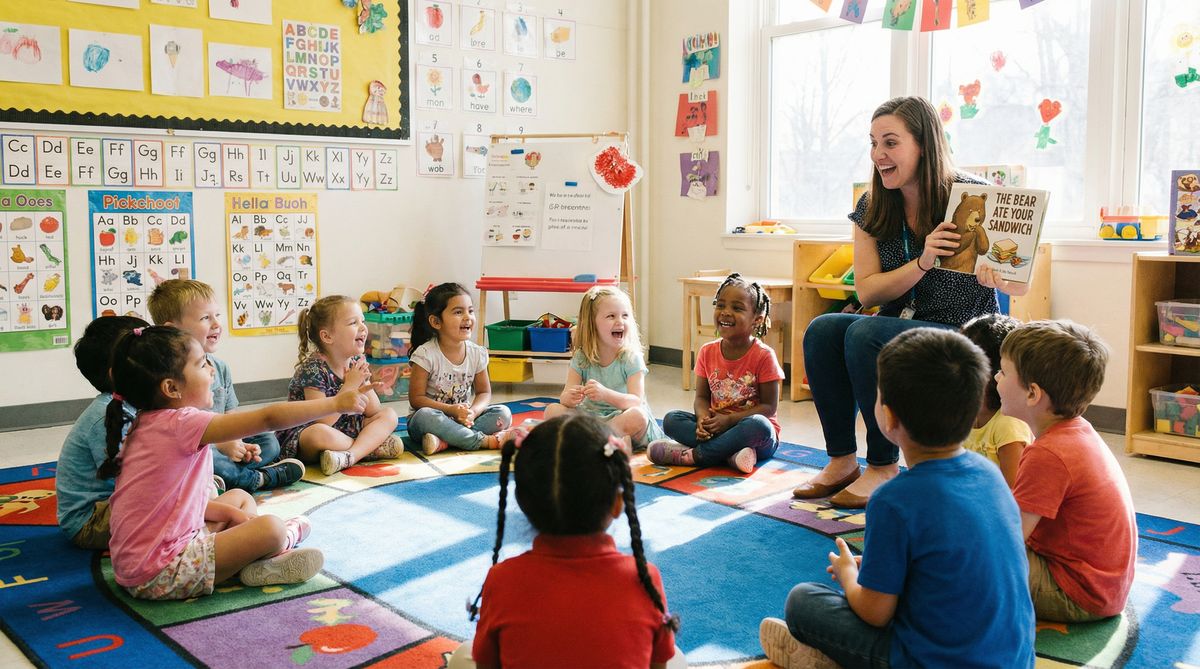
Toddlers sitting in a circle during group time at a preschool classroom

You've been thinking about it for a while now. Maybe your toddler needs more stimulation than you can provide at home. Maybe you're heading back to work. Maybe you just have a gut feeling that your kid is ready for something bigger. But how do you actually know?

There's no magic age that works for every child. Some 18-month-olds walk into a room full of kids and light up. Some three-year-olds still need another six months before group care clicks. What matters isn't the number on their birthday cake — it's a handful of specific developmental signals that tell you they're ready to thrive with other children.

The Developmental Signs That Actually Matter

Forget the generic advice about "when they can walk and talk." Those are baseline motor milestones, not readiness indicators. Here's what early childhood educators actually look for.

They Show Interest in Other Kids

This is the big one. Watch your toddler at the playground, at a friend's house, or even at the grocery store. Do they stare at other children? Try to approach them? Offer toys or food (even if the "offer" is really just shoving a cracker at someone's face)? That social curiosity is the clearest sign that group care could be a good fit.

Toddlers who are genuinely disinterested in peers — who actively avoid other kids or get distressed around them — may need more time. That's not a failure. It's just where they are right now.

They Can Handle Short Separations from You

Notice the word "short." Nobody expects a 20-month-old to cheerfully wave goodbye for eight hours. But if your toddler can stay with a grandparent, a babysitter, or a friend's parent for 30 to 60 minutes without a full meltdown, that's a solid foundation. They've started building the mental framework that says "my parent leaves, but my parent comes back."

If separations still trigger intense panic every single time, that doesn't mean group care is off the table — but it does mean the transition will need more scaffolding. A good program knows how to handle that.

They're Starting to Follow Simple Routines

Group childcare runs on routines. Circle time, snack, outdoor play, nap, repeat. Your toddler doesn't need to follow a rigid schedule at home, but if they can handle basic sequences — shoes on before going outside, wash hands before eating, books before bed — they'll adjust to a classroom rhythm faster.

Kids who resist any structure at all can still succeed in group care, but expect a longer adjustment period. The routine itself often becomes the thing that helps them feel secure.

They Have Some Basic Communication

This doesn't mean full sentences. It means they can express basic needs — pointing at a cup when thirsty, pulling at a diaper when uncomfortable, saying "no" when they don't want something. Teachers in toddler rooms are experts at reading nonverbal cues, but a child who can signal their needs (even crudely) will feel less frustrated in a group setting.

They're Physically Mobile and Curious

Toddler classrooms are designed for kids who move. If your child is walking steadily, exploring spaces on their own, and getting into everything at home, they're physically ready for the kind of environment a childcare center provides. That restless energy you're trying to manage at home? A well-designed classroom channels it into purposeful exploration.

Age Ranges: What's Typical in NYC

In New York City, most childcare centers accept children starting at around 6 weeks for infant care, but the toddler transition — moving from a home setting or nanny to a group program — typically happens between 12 and 24 months.

NYC's publicly funded programs have specific age cutoffs. 3-K for All starts at age three, and UPK (Universal Pre-K) begins at four. Both are free and available citywide, though seats in popular programs fill fast. If you're looking at group care before age three, you're typically looking at private daycare centers, some of which accept HRA childcare vouchers or ACS subsidies to offset costs.

At centers that serve the toddler age range — places like Sunshine Learning Center, which operates across East Harlem, Harlem, Yorkville, Mott Haven, and Coney Island — classrooms are specifically designed for the 1-to-3 age group. The teacher-to-child ratios are tighter (NYC DOH requires 1:5 for toddlers), the furniture is lower, and the activities are geared toward emerging language and motor skills.

The Myths You Can Ignore

"They Need to Be Potty Trained First"

No. Most toddler programs handle diapers daily. In fact, many centers actively help with potty training as part of their curriculum. If a program tells you your 18-month-old must be potty trained to enroll, that's a red flag about the program — not about your child.

"They Should Be Able to Share"

True sharing — understanding that another person wants the toy and voluntarily giving it — doesn't reliably emerge until age three or later. Toddler teachers know this. They use strategies like having duplicates of popular toys, modeling turn-taking language, and redirecting. Your child doesn't need to arrive knowing how to share. That's literally what they'll learn there.

"If They Cry at Drop-Off, They're Not Ready"

Almost every toddler cries at drop-off during the first week or two. Many cry at drop-off for months — and then stop crying 30 seconds after you leave. Drop-off tears are about the transition moment, not about overall readiness. Ask the teachers what happens after you walk away. That's the real data point.

"Home Care Is Always Better for Babies and Toddlers"

Research doesn't support this as a blanket statement. High-quality group care — with trained teachers, low ratios, and a real curriculum — produces outcomes that are as good as or better than home care for most children, particularly for language development and social skills. The key word is "high-quality." A mediocre daycare with overwhelmed staff and no curriculum is worse than a stimulating home environment. But a strong program? That's a genuine developmental advantage.

Questions to Ask Yourself (Honestly)

Before you tour a single center, sit with these questions:

Is this about my child's needs or my anxiety? Sometimes parents delay group care because they're not ready, not because the child isn't. That's valid — your comfort matters too. But name it for what it is.

What does my child need that they're not getting right now? If your toddler is bored at home, understimulated, or clearly craving peer interaction, group care addresses that directly. If they're thriving and engaged in their current setup, there's less urgency.

Can I commit to the adjustment period? The first two to four weeks of group care are rough for most families. Early pickups, extra clinginess at home, maybe some sleep disruption. If you're starting a demanding new job the same week your child starts daycare, the timing might compound stress unnecessarily.

Do I have a center I actually trust? Readiness isn't just about the child — it's about finding a program where you genuinely believe the teachers will care for your kid well. If you haven't found that place yet, keep looking. The right environment makes a massive difference.

What "Ready" Looks Like in Practice

Here's a composite picture of a toddler who's likely to adjust well to group childcare:

They notice other kids and want to be near them, even if they don't know how to play together yet. They can tolerate brief separations from their primary caregiver without sustained distress. They follow simple one- or two-step directions at least some of the time. They communicate basic needs through words, signs, or gestures. They're mobile and physically active. And — this one's underrated — they eat and sleep with some degree of predictability, even if the schedule isn't perfect.

That's it. They don't need to be independent. They don't need to be social butterflies. They don't need to sit still for 20 minutes or recite the alphabet. They need to be developing, curious, and starting to orient toward the world beyond their immediate family.

What If They're Not Ready Yet?

Then you wait. There's no penalty for starting group care at 18 months instead of 12, or at two instead of 18 months. Every child's timeline is different, and pushing a kid into group care before they're developmentally ready can create negative associations that make the eventual transition harder.

In the meantime, you can build readiness at home. Arrange playdates (even short, parallel-play ones). Practice brief separations with trusted adults. Build simple routines into your day. Read books about going to school. Visit a center and walk around the playground even before enrollment.

When You're Ready to Take the Next Step

If the signs are there and you've found a program that feels right, trust your instincts. Schedule a tour. Most NYC centers — including Sunshine's locations across the Bronx, Manhattan, and Brooklyn — welcome walk-throughs so you can see the toddler rooms in action, ask teachers questions, and get a feel for the environment your child would be entering.

Your toddler doesn't need to be perfect to start group care. They just need to be ready enough — and the right program will meet them exactly where they are.

Explore moreBlogs & Articles

2
Min
August 21, 2026

How to Choose the Right Daycare for Your Child in New York City

Selecting a daycare for your child is one of the most important decisions you'll make as a parent. In a city like New York, where families are juggling careers, commutes, and countless responsibilities, finding quality early childhood care can feel overwhelming. You want a place where your child will be safe, nurtured, and prepared for the next stage of their educational journey. But with so many options across the five boroughs, how do you know which daycare is the right fit for your family?

This guide will walk you through the essential factors to consider when choosing a daycare in NYC, from staff qualifications to safety standards, developmental benefits, and red flags to watch for. By the end, you'll have a clear framework for evaluating centers and making a confident decision.

What Makes a Quality Daycare? Start with the Fundamentals

Before touring any center, it's crucial to understand what separates excellent daycare from basic childcare. Quality comes down to several foundational elements.

Staff Qualifications and Experience

The most important asset any daycare has is its teachers. Look for centers where staff members hold degrees in early childhood education or a related field. Teachers should be trained in first aid and CPR, and ideally, they have several years of experience working with the age group you're considering. Don't hesitate to ask about each teacher's background, qualifications, and professional development opportunities. Staff retention matters too; high turnover signals underlying problems, while a stable teaching team demonstrates commitment and continuity in your child's care.

Teacher-to-Child Ratios

Staffing ratios directly impact the quality of care your child receives. New York State has specific licensing requirements for childcare facilities. Typically, infant rooms require a 1:4 ratio (one teacher per four infants), toddler rooms need 1:5 or 1:6, and preschool classrooms operate at 1:8 to 1:10. These ratios ensure that teachers can provide individualized attention, respond to each child's needs, and manage the classroom effectively. Always verify the actual ratios at your prospective center, as some go above state minimums.

Licensing and Compliance

New York State Department of Health licenses all childcare centers serving more than six children. Verify that any center you're considering is fully licensed and in good standing. You can check the NYS Department of Health database online to view inspection reports, compliance histories, and any violations. A clean compliance record gives you confidence that the center maintains health, safety, and educational standards.

Understanding Age-Appropriate Learning Environments

Children develop rapidly, and their daycare environment should match their developmental stage. Quality centers organize classrooms specifically for each age group.

Infant Programs (6 Weeks to 12 Months)

Infants need a calm, responsive environment focused on building secure attachments. Look for classrooms with soft lighting, age-appropriate sensory materials, and teachers who respond quickly to cues. The space should include safe exploration areas, clean diaper-changing stations, and separate sleep areas. Infant programs emphasize milestone tracking and communication with parents about development and daily activities.

Toddler and Preschool Environments (1 to 5 Years)

As children grow, classrooms should evolve to support their curiosity and independence. Quality programs include learning centers for dramatic play, blocks, art, reading, and manipulatives. Materials should be organized at child height, encouraging exploration. You should see evidence of structured routines alongside open-ended play. Look for curricula that balance academic skill-building with creative play; research-based approaches like The Creative Curriculum emphasize school readiness while keeping learning joyful.

Questions to Ask During Your Daycare Tour

A tour is your opportunity to observe the center in action and get a feel for the environment and staff. Here are key questions to ask and observations to make.

Curriculum and Learning Approach

Ask the director to explain the daycare's curriculum and educational philosophy. Do they use a structured, research-based approach or a play-based model? How do they track child development? What does a typical day look like? Request to see lesson plans and ask how they adapt activities for different developmental levels. Strong programs communicate regularly with parents about what children are learning and how families can support learning at home.

Daily Communication and Parent Involvement

How do teachers stay in touch with parents about their child's day? Many quality centers use apps like Tadpoles to share photos, videos, and daily updates. Ask about parent-teacher conferences, newsletters, and community events. Quality centers view parents as partners and create opportunities for involvement beyond drop-off and pick-up.

Transitions and School Readiness

If your child will eventually transition to kindergarten, ask how the program prepares children for that shift. What skills are emphasized in pre-K? How do teachers support social-emotional development? Are there orientation activities to familiarize children with school routines?

Staff Training and Support

Ask about professional development. Do teachers attend workshops and trainings? Are there opportunities for growth? How does the center handle challenging behaviors? Strong programs invest in staff development because they recognize that trained, supported teachers provide better care.

Health Policies and Illness Management

Clarify policies on illness, medication, allergies, and immunizations. How does the center handle a child with a fever or contagious illness? What's the process for administering medication? Are staff trained in recognizing and responding to allergic reactions?

Safety and Cleanliness Standards

Your child's physical safety and health are non-negotiable priorities.

Facility Inspection and Maintenance

During your tour, observe the overall cleanliness and maintenance of the facility. Are bathrooms and diaper areas spotless? Is there a dedicated hand-washing station? Are toys regularly sanitized? Are floors and surfaces clean? Are there clear emergency exits? Does the center conduct regular fire drills?

Outdoor Space and Supervision

If the center has an outdoor area, assess the equipment safety and maintenance. Is the space securely fenced? Is it clean? Is there adequate shade and water? Most importantly, is there always a staff member directly supervising children? In NYC, where many centers use rooftop or small outdoor areas, make sure the space is age-appropriate and well-maintained.

Health and Wellness Protocols

Ask about sick-child policies, handwashing procedures, food handling, and allergen management. Does the center update parents quickly if a child becomes ill? How do they prevent the spread of illness during cold and flu season? If your child has allergies or special health needs, ensure the staff is trained and the center can accommodate those needs safely.

NYC-Specific Considerations

New York City presents unique challenges and opportunities for families selecting daycare.

Location and Commute

NYC daycares vary dramatically by neighborhood and borough. Consider whether the center is near your home, workplace, or your commute route. A center that's inconvenient for drop-off and pick-up creates stress for your entire family. Many families prioritize centers within walking distance or a single subway stop. Also consider NYC traffic and unpredictable commute times; factor in a buffer for delays.

Hours and Flexibility

New York families often have demanding schedules. Does the center offer hours that match your work schedule? Many Sunshine Learning Centers, for example, open as early as 7 AM and stay open until 6:30 PM, accommodating long commutes and non-traditional work hours. Some centers offer extended hours during school breaks or summer. Clarify whether the center closes on holidays and whether backup care is available.

Neighborhood Fit and Safety

Walk around the neighborhood at different times of day. Does it feel safe and welcoming? Are there nearby parks, libraries, or community resources? Consider whether the neighborhood feels like a good fit for your family's lifestyle and values.

Diversity and Inclusion

NYC is incredibly diverse, and many families want their children to learn in multicultural, inclusive environments. Ask about the center's approach to diversity, representation in curriculum and staff, and how they celebrate different cultures, languages, and family structures. Quality centers recognize and celebrate their families' backgrounds.

The Social and Developmental Benefits of Early Learning

Research consistently shows that quality early childhood education benefits children across multiple domains.

Social-Emotional Development

Daycare teaches children to interact with peers, manage emotions, resolve conflicts, and develop empathy. These skills form the foundation for healthy relationships throughout life. Children learn to share, take turns, comfort a friend, and express their feelings appropriately. Quality programs intentionally teach social skills through modeling, guided practice, and reflection.

Cognitive Growth and School Readiness

Children who attend quality early education programs develop stronger pre-academic skills, including letter and number recognition, vocabulary, and problem-solving abilities. They're more likely to be kindergarten-ready, which sets them up for academic success. Research shows that children from quality early childhood programs perform better on standardized tests and are more likely to graduate high school and college.

Independence and Confidence

Being in a structured environment with new adults and peers builds independence and confidence. Children learn to separate from parents, navigate group situations, and accomplish new tasks. This growing sense of competence carries throughout their lives.

Language and Communication

Exposure to diverse peers and thoughtful teachers expands children's vocabulary and communication skills. If your center offers a second language, like Spanish, children gain additional cognitive and academic advantages.

Red Flags: What to Avoid

While looking for the right daycare, stay alert to concerning signs that suggest you should keep looking.

Red flags include: - Staff that seem disengaged, rushed, or dismissive of parent questions - Dirty facilities, bathrooms, or diaper-changing areas - Teachers who raise voices or speak harshly to children - Lack of structure or excessive screen time - Difficulty getting information about your child's day - No evidence of curriculum or intentional learning activities - Staff that seem resistant to answering questions about qualifications or policies - Facilities that limit parent observation or don't allow unannounced visits - Teachers who seem burned out or constantly complaining

Trust your gut. If something feels off during a tour, it probably is.

Making Your Decision: A Thoughtful Process

After researching and visiting centers, take time to reflect on your experience. Consider how you felt during each tour. Did the staff greet you warmly? Did you see teachers engaged and responsive with children? Did the environment feel inviting and well-organized? Did you feel comfortable asking questions?

Create a simple comparison list of your top choices, noting key factors like curriculum approach, hours, location, cost, and overall feel. Discuss your observations with your partner or a trusted family member. Trust that you have good instincts about what's right for your child.

Find Your Sunshine

Choosing a quality daycare is an investment in your child's future. The early years are foundational for brain development, social skills, and a lifelong love of learning. You deserve a center where your child is happy, safe, and thriving.

Sunshine Learning Centers understands what matters to NYC families. With [eight locations across Manhattan and the Bronx](https://www.sunshinenewyork.com/locations), we offer quality early childhood education rooted in The Creative Curriculum, research-proven approaches to learning, and a deep commitment to each child's development. Our staff are highly qualified, our ratios are tight, and our focus is on preparing children not just for school, but for life.

Ready to explore the right daycare for your family? [Schedule a tour](https://www.sunshinenewyork.com/book) at a Sunshine Learning Center near you. Learn more about our [curriculum approach](https://www.sunshinenewyork.com/curriculum), and discover why parents across NYC trust Sunshine to care for their most precious assets.

Your child deserves the best start. Let's make it a Sunshine one.

READ ARTICLE
2
Min
June 22, 2026

Screen Time and Young Children: What the Research Actually Says

Young children building with colorful blocks in a preschool classroom

The American Academy of Pediatrics has released screen time guidelines at least three times in the last decade. Every update triggers the same panic among parents: "Are we doing this right? Will screens ruin our kids?"

Here's what you actually need to know about screen time and young children, based on research that's not trying to scare you.

What the Research Actually Shows

The AAP's current stance (as of 2023) is: for children 6 and under, background TV doesn't help. Passive screen time, the kind playing in the background while kids do other things, has no developmental benefit. That's the key finding most parents misunderstand.

But here's what matters more: active engagement beats passive viewing every time. If your toddler is watching a parent play with apps together, talking through what they see, asking questions, that's different from parking them in front of YouTube Kids while you shower.

The CDC and AAP recommend limiting screen time for children under 18 months to high-quality content you're watching together. For kids 18 months to 5 years, 1-2 hours of quality programming per day is fine. The word "quality" is doing most of the work in that sentence.

Quality vs. Just... Whatever's on

A quality program has a few markers: it slows down (fast cuts and flashy transitions hurt attention development), uses clear language, repeats concepts, and ideally includes a parent-interaction component. Shows like Daniel Tiger or Sesame Street were designed with child development in mind. An algorithm-recommended patchwork of trending clips was not.

What research actually worries about isn't screen time itself; it's displacement. Every hour on screens is an hour not spent playing, talking with adults, or getting messy with blocks and paint. That's the real loss, not that the screen is inherently toxic.

If your 2-year-old watches 20 minutes of quality TV while you prep dinner, and spends the rest of the day building, climbing, talking, and playing outdoors, the research suggests you're fine. If your 4-year-old is getting 4 hours of total screens daily, you've got a problem. But the problem is displacement, not screens specifically.

What Sleep and Development Research Tells Us

Here's where screens matter most: blue light before bed interferes with melatonin production. No screens 30-60 minutes before sleep. That's one of the firmest findings in pediatric sleep research. It's not that screens are bad; it's that they're activating before bed specifically.

The other solid finding: language development happens through conversation, not video. You can show your toddler educational apps all day, but Sunshine Learning Center teachers will tell you: kids learn to talk by talking with people. Videos don't have a back-and-forth, so they don't build language in the same way.

That's not a judgment call. That's just how the brain works at that age. Screens provide information. Conversations teach your child that communication is interactive.

The Bigger Picture: What Matters More Than Screen Minutes

Research on child development consistently shows these factors matter much more than screen time totals:

  • Adult responsiveness: Parents who respond to their kids' attempts to communicate (even if it's just babbling) accelerate language and social development.
  • Play-based learning: Unstructured play like blocks, dirt, make-believe, and climbing develops problem-solving, creativity, and social skills faster than any app.
  • Physical activity: Kids under 5 need at least 3 hours of movement daily (including running, climbing, dancing). This is non-negotiable for attention, coordination, and emotional regulation.
  • Sleep: An overtired toddler with perfect screen limits is still struggling more than a well-rested kid who watches TV. Quality sleep is the foundation.
  • Outdoor time: Nature exposure specifically improves focus and reduces anxiety in young children. 30 minutes daily makes a measurable difference.

If you nail these five things and your kid watches 90 minutes of quality TV three times a week, the research does not predict problems.

Why Parents Panic (And Why They Shouldn't)

The research on screen addiction in young children is not particularly scary. Unlike older kids and teens, toddlers and preschoolers don't show classic addiction patterns. They won't withdraw. They can't (yet) search for dopamine hits via apps.

What actually happens if screens are overused: less time for other stuff. Less play, less movement, less conversation. That's the causal chain. It's not that screens are poisoning the brain; it's that they're taking up time that could go to development.

This matters because it means the fix is structural, not neurological. You're not undoing damage by cutting screens. You're redirecting time to better stuff.

If you're curious about what actually builds skills faster than screens, check out our post on why play-based learning works better than worksheets. The research backs it up.

Practical Limits That Match the Research

If you want to align with AAP recommendations without stress:

  • For 0-18 months: Background TV off. Screens only with active co-viewing (a parent sitting, pointing, talking).
  • For 18 months-5 years: Max 1-2 hours daily of quality, slower-paced content. Prioritize shows with a parent-interaction tie-in (Daniel Tiger, Bluey, Sesame Street).
  • No screens 30-60 minutes before bed. This is the firmest recommendation in the research.
  • Prioritize live play. If it's a choice between a learning app and blocks, blocks win every time.
  • Co-view when you can. Don't feel guilty if you can't. But when you do, talk about what you see. That's where the benefit actually lives.

Everything else is flexibility. Every family's balance is different.

What About Educational Apps?

Good news and bad news. Good: educational apps designed by child development experts do teach skills faster than passive viewing. Bad: they still don't teach language as well as talking with an adult, and they don't build problem-solving the way unstructured play does.

Apps are useful as supplemental tools; teaching letter sounds, basic numbers, fine motor skills on rainy days. They're not replacements for the foundational stuff. Use them strategically, not as a substitute for the basics.

If you're trying to decide between a month of premium educational apps or a month of outdoor activities, materials for messy play (sand, water, paint), and more time with adults who respond to your kid, the research is clear. The latter wins.

Research also shows that separation anxiety is normal and manageable when schools handle screen time thoughtfully. Context and relationships matter far more than screen minutes.

The Real Issue: Context Matters More Than Numbers

A kid whose parent checks their phone every 15 seconds while they're together? That's a bigger problem than that same kid watching 90 minutes of Daniel Tiger while the parent is fully present for the rest of the day. The research on parental attention and phone use is worse than anything about kid screen time.

An overscheduled family where screens fill every gap because no one has time to play? That's a context problem, not a screen problem. A family with good rhythm, active play, outdoor time, meals together, responsive adults, and good sleep can handle screens without stress.

The worry isn't whether your 4-year-old watches 60 minutes or 90 minutes of TV. The worry is whether screens are displacing the stuff that actually builds healthy development. If they're not, the research says you're okay.

What to Watch For (Real Red Flags)

The actual signs that screen use is a problem:

  • Your child gets aggressive or very upset when screens go away (suggests emotional regulation issues, not screen addiction).
  • Screens are preventing sleep, social time, or outdoor play.
  • Screen time is growing to fill more and more of the day without intention.
  • Your kid is watching unpredictable, algorithmically-driven content (YouTube rabbit holes, not intentional shows).
  • There's no co-viewing or parent involvement when they are on screens.

If none of these apply, you're not looking at a problem. You're looking at normal family life in 2026.

A Practical Reality Check

Most parents trying to apply research on screen time are already being responsible about it. The families with real problems; kids on 6+ hours daily of whatever random content; aren't reading articles like this. You're asking the question, which means you care.

Here's what matters: your kid gets outside most days, gets active play time, hears responsive conversation, sleeps well, and has some screen time that's intentional (not accidental or background). If that's your life, you're way ahead of the research worries.

The apps, the minutes, the optimal ratio; that's the small stuff. The big stuff is whether your child is developing language, problem-solving, and emotional skills through play, conversation, and movement. Screens are a small part of that picture, not the whole thing.

When you visit Sunshine Learning Center's classrooms, you'll see what research actually recommends: kids building, exploring, moving, talking, problem-solving together. Some of them will have watched TV that morning. Most will have. It doesn't undo what happens when they're in an environment built for play-based learning.

That's the real context for screen time: it's fine, as long as it's not replacing the active, responsive, playful time that actually shapes development. Do that, and you're following the research.

READ ARTICLE
2
Min
August 21, 2026

What Parents Should Know About NYC DOH Daycare Licensing

Colorful preschool classroom with children learning and playing

When you're choosing a daycare or preschool for your child in New York City, you'll hear a lot about "licensing." Maybe you've seen a certificate on the wall. Maybe someone mentioned that their kid's center "got violations." But what does licensing actually mean, and why should you care?

Here's the truth: NYC daycare licensing is one of the few official standards protecting your child's safety and development. Unlike hiring a nanny or using informal family care, licensed centers have to meet specific rules set by the New York City Department of Health and Mental Hygiene (DOH). Understanding these rules helps you make better decisions about where your child spends their day.

What Does "Daycare Licensed" Actually Mean?

A licensed daycare center in New York City has been inspected and approved by the DOH to care for children. The center must comply with specific health, safety, and staffing regulations. Licensing is not optional. If a center cares for more than three unrelated children, it legally must be licensed by the DOH.

This distinction matters. Family daycare providers who care for fewer kids (typically 1-6 children) follow different rules and are registered, not licensed. Group centers like Sunshine Learning Center, which operate locations across Harlem, East Harlem, Yorkville, and other NYC neighborhoods, are fully licensed facilities.

Licensing means:

  • Staff meet specific education and training requirements
  • The facility passes health and safety inspections
  • Child-to-staff ratios are legally enforced
  • Records are maintained and inspected by DOH
  • Parents have the right to review inspection reports

NYC DOH Staffing Requirements (What They Actually Mean)

This is where licensing gets specific. The DOH sets staff-to-child ratios depending on the age group.

For infants (birth to 2 years): 1 staff member per 3 children. For toddlers (2-3 years): 1 staff member per 5 children. For preschool (3-5 years): 1 staff member per 8 children. For school-age (5+ years): 1 staff member per 12 children.

These ratios matter because they directly affect how much attention your child gets. More staff per child means more one-on-one time, better response to needs, and safer supervision. When you visit a classroom, you can literally count the adults and children to verify compliance.

All lead teachers must have at least a high school diploma or GED. Directors must have specific early childhood credentials. Most staff require training in child CPR, first aid, and health and safety. Many centers, including Sunshine Learning Center, exceed these minimums by hiring staff with associate or bachelor's degrees in early childhood education.

The Inspection Process (And What You Can See)

Licensed centers receive unannounced inspections by DOH officials. These inspections check:

  • Safety: fire extinguishers, emergency exits, safe storage of hazardous materials, appropriate temperature and lighting.
  • Health: handwashing stations, clean food service, disease prevention procedures, immunization records.
  • Supervision: verifying staff-to-child ratios, trained staff on site.
  • Facilities: age-appropriate equipment, outdoor play space (where applicable), sanitary bathrooms.
  • Records: staff credentials, parent communication logs, incident reports, health inspections.

After an inspection, the center receives a report. Any violations are documented. These violations fall into categories: critical violations (immediate health/safety risks), major violations (failure to meet licensing standards), and minor violations (administrative issues).

A center with a few minor violations isn't necessarily a red flag. It's normal. Violations like "bathroom soap dispenser empty" get fixed immediately. But critical violations like "staff ratios exceeded" or "unlicensed person left alone with children" are serious and must be remedied. Check out our guide to understanding daycare inspection reports for more details on what each violation means.

How to Check a Daycare's License Status

Finding the inspection report for a specific center is easier than most parents realize.

Go to NYC DOH's daycare search portal online. Enter the center's name or address. The database shows license status (active, expired, suspended, revoked), license expiration date, number and date of recent inspections, violations from the last three inspections, and any enforcement actions.

You can also call the DOH directly. Staff can answer questions about a specific license and violations.

When you visit a center, ask to see the current license certificate. It should be posted and current (not expired). Ask about recent inspections and violations. A good center director will explain violations transparently and show you how they addressed them.

If a center is evasive or won't show you the license, that's a warning sign.

UPK is Different (And That's Okay)

Universal Pre-Kindergarten (UPK) programs run by NYC Department of Education in public schools follow different oversight. If you want to understand how UPK works compared to licensed daycare, read our guide to NYC's UPK and 3-K programs. UPK centers are not DOH licensed. Instead, they're overseen by NYC DOE. Standards are similar but the licensing and inspection process is different.

This doesn't mean UPK is worse. Many UPK programs are excellent. But if you're comparing an independent licensed daycare to UPK, understand they follow different regulatory pathways. Sunshine Learning Center accepts UPK vouchers at our licensed locations, which means you get the benefit of DOH licensing standards plus the affordability of UPK.

What Violations Actually Cost You (Spoiler: It's Not What You Think)

Parents often assume violations mean something is deeply wrong. It's not that simple.

Minor violations might include documentation incomplete, a staff member's CPR certification lapsed by a few days (since renewed), a toy stored in the wrong place, or a form filed late. These are easily fixed and very common.

Major violations are more serious: staff acting outside their training, improper supervision, facilities not meeting cleanliness standards, or failure to keep required records. These require a corrective action plan.

Critical violations are emergencies: children left unattended, unlicensed staff caring for children unsupervised, hazardous materials accessible to kids, or active illness outbreak not being managed. These can result in immediate closure or suspension.

One or two minor violations in a three-year history doesn't disqualify a center. Look for patterns. A center with 10+ violations across three inspections, or critical violations that keep reoccurring, is different from a center with a clean record.

The Real-World Check: Beyond the License

Licensing is a baseline. It's the legal minimum. Many of the best centers go beyond. When you visit any preschool or daycare, ask about staff qualifications, curriculum approach, outdoor play space, and parent involvement. If you're curious about specific teaching methods like Creative Curriculum, most quality centers are happy to explain their approach.

Sunshine Learning Center combines full DOH licensing with additional quality markers: Reggio Emilia and Creative Curriculum approaches, outdoor learning spaces at most locations, and staff with degrees in early childhood education.

Licensing tells you if a center meets minimum safety and staffing standards. Your gut tells you if it's the right fit for your child.

Three Things Every NYC Parent Should Do

First: Look up any center you're considering online before you visit. Know their license status and recent violations beforehand. The DOH database is public and free.

Second: Ask to see the license and inspection report in person. A transparent director will hand them over without hesitation. If you don't see them posted on the wall, ask why.

Third: Use licensing as one factor in your decision, but not the only one. Visit the center. Watch how staff interact with kids. Pay attention to how your child feels about the environment. Licensing ensures basics. Your instincts cover everything else.

Understanding NYC DOH licensing doesn't require a legal degree. It just means you know what you're looking for and how to find it. If you're exploring daycare or preschool options in New York, we're happy to answer questions about licensing, our inspection history, or how our centers operate. Visit sunshinenewyork.com to schedule a tour and see firsthand what licensed care looks like.

READ ARTICLE
Become a Sunshine Teacher

Join a team that shares your passion.

Apply TODAY
Music
Language
Movement
Culture
Community
Arts
Academics
Social Skills