The Building Blocks of Movement: Fine vs Gross Motor Skills

DATE
August 13, 2025

Every parent marvels at their child’s rapid development, from the first time they roll over to the moment they expertly tie their shoelaces. While these milestones may seem like simple acts, they are the result of a complex and fascinating process known as motor skill development. 

Understanding the difference between fine vs gross motor skills is key to supporting your child’s growth and setting them up for a lifetime of confidence and capability. At its core, a child’s ability to move and interact with their world is the foundation for all future learning, from academic success to social and emotional well-being.

Motor skills are the learned abilities to perform movements with precision and control. For young children, this development is not just about mastering physical tasks; it’s about the brain and body working together in harmony. As a child's brain matures, it sends signals to the muscles, strengthening them and helping them learn coordinated movements. These learned actions become a crucial part of a child’s independence, allowing them to play, learn, and engage with their environment in increasingly sophisticated ways.

Gross Motor Skills: Mastering the Big Moves

Gross motor skills refer to the abilities that involve the large muscles of the body, particularly those in the torso, arms, and legs. These are the "big movements" that allow children to control their body position and move through space. Think about the actions that require strength, balance, and coordination of the entire body or major limbs. From the wobbly first steps of a toddler to the confident strides of a preschooler, these skills are continuously being refined through practice and play.

Examples of gross motor skills in action include running, jumping, hopping, skipping, climbing, and throwing a ball. The ability to kick a ball during a game of soccer, ride a tricycle, or navigate a playground slide all rely on strong gross motor control. Developing these skills is essential for physical health, building confidence, and fostering social play. They are the foundation of physical literacy, enabling children to explore their surroundings and participate in active games that are vital for both their physical and social development.

Fine Motor Skills: Precision in Little Hands

In contrast to gross motor skills, fine motor skills involve the coordination of smaller muscles, primarily in the hands and fingers, often in conjunction with the eyes (hand-eye coordination). These are the "small, precise movements" that allow for intricate manipulation of objects and detailed tasks. These abilities are crucial for a child’s growing independence, from self-care to academic readiness.

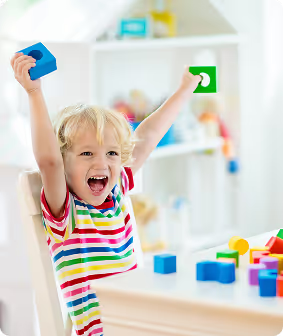
Common examples of fine motor skills in young children include grasping small toys, stacking blocks, holding a crayon or pencil, cutting with child-safe scissors, buttoning clothes, zipping zippers, and turning pages in a book. The development of these skills is crucial for self-help activities, like getting dressed or feeding themselves. They are also a key predictor of academic readiness, as a child’s ability to manipulate a pencil is directly linked to their ability to write and express their thoughts on paper. Without these skills, simple tasks that we take for granted can become frustrating barriers to learning and independence.

A Dynamic Duo: How Gross and Fine Motor Skills Connect

While often discussed separately, gross and fine motor skills are not isolated; they are deeply interconnected and work as a dynamic duo in a child's development. This is especially true when observing the gross motor skills vs fine motor skills of preschoolers, as their bodies and brains are making rapid connections. For instance, a child needs good core strength and stability (a gross motor skill) to sit upright at a table before they can effectively hold a pencil and draw or write (a fine motor skill). A strong, stable foundation allows for the precise, controlled movements of the hands and fingers.

This synergy means that development in one area often supports and enhances the other. Activities that engage large muscle groups help build the stability and coordination that ultimately refines the smaller, more precise movements. Conversely, practicing fine motor tasks can subtly improve body awareness and control. A child who spends time building a Lego tower, for example, is not only honing fine motor skills but also developing the hand-eye coordination and spatial awareness that contribute to overall body control. Recognizing this interplay allows for a more holistic approach to fostering a child's physical and mental capabilities.

Fostering Motor Skill Development at Home

Nurturing both gross and fine motor skills involves providing a rich environment with varied opportunities for exploration and play. At home, you can encourage plenty of active, unstructured outdoor play. This could include running in open spaces, climbing on playground equipment, riding bicycles, or navigating simple obstacle courses. For fine motor skills, offer activities that require precision and manipulation, such as puzzles, playing with playdough or clay, drawing, and using child-safe scissors.

Nurturing Development in NY, One Skill at a Time

At Sunshine Learning Center, we understand this vital connection and intentionally integrate both types of activities into our curriculum and enrichment programs. Our classrooms are designed to be a vibrant space for physical exploration. We believe that purposeful play is the most effective way to learn, and our curriculum is built around hands-on activities that strengthen both large and small muscle groups. Whether it’s a morning of outdoor play, a sensory art project, or a structured group activity, we ensure every child has the opportunity to build the skills they need to thrive.

Developing strong fine vs gross motor skills is a crucial part of a child's journey toward independence and confidence. These abilities are the foundation upon which academic, social, and emotional growth are built. By providing opportunities for both big, sweeping movements and small, precise tasks, we are not just teaching children to move—we are empowering them to learn and engage with the world in a meaningful way.

If you are looking for a program that champions this comprehensive approach to child development, consider Sunshine Learning Center. Our dedication to a holistic curriculum ensures that every child receives the support they need to reach their full potential. To learn more about our philosophy and see our programs in action, including our dynamic Summer Camp filled with activities that foster both fine and gross motor skills, we invite you to contact us and schedule a tour.

Explore moreBlogs & Articles

2
Min
November 20, 2025

When Can Babies Learn Sign Language? Unlocking Early Communication

Babies are naturally communicative beings, even before they utter their first words. They use gestures, facial expressions, and sounds to express their needs and desires. Introducing sign language can tap into this innate ability and provide a powerful tool for early communication, bridging the gap between a baby's understanding and their ability to verbalize. This reduces frustration for both parent and child, paving the way for a more harmonious and understanding relationship. At Sunshine Learning Center, we believe in nurturing every child's communication potential, and baby sign language is a wonderful way to do just that.

Understanding Baby Development: The Foundation for Sign Language

Early Communication Milestones

From the moment they're born, babies begin to develop communication skills. They listen intently to the sounds around them, recognizing familiar voices and responding to different tones. While they may not be ready to form complex sentences, their cognitive development is rapidly progressing, making them incredibly receptive to visual communication like sign language.

Receptive vs. Expressive Language

One of the most fascinating aspects of language development is that the ability to understand language develops earlier than the ability to produce spoken words. This means babies can often understand and respond to signs before they can say the corresponding words. This receptive understanding is absolutely key to their ability to learn sign language. They grasp the meaning behind the visual cues, even if they can't yet replicate the signs themselves perfectly.

The Optimal Time to Introduce Sign Language: Finding the Right Moment

The Six-Month Mark and Beyond

Most experts agree that babies can begin learning sign language as early as six months old. At this age, they are becoming increasingly aware of their surroundings and are developing better hand-eye coordination. Introducing signs at this stage can be a natural extension of the gestures they already use, like waving "bye-bye" or reaching for "more."

It's Never Too Late to Start!

While six months is a great starting point, it's never too late to introduce sign language. Babies of any age can benefit from learning signs. Even toddlers who are beginning to speak can use sign language to clarify their communication and express more complex ideas. Sometimes, a toddler might know the sign for something before they can pronounce the word, reducing frustration and boosting their confidence.

Benefits of Baby Sign Language: A World of Advantages

Reducing Frustration and Tantrums

Imagine a baby trying to tell you they're thirsty, but they don't yet have the words. Frustration quickly builds, often leading to tears and tantrums. Sign language provides a way for babies to express their needs, wants, and observations before they can speak. This empowers them to communicate effectively, significantly reducing frustration for both babies and their caregivers.

Boosting Cognitive Development and Language Acquisition

Research suggests that baby sign language may also support cognitive development and even enhance language acquisition. By engaging multiple parts of the brain, sign language can create stronger neural connections and lay a solid foundation for future language skills. It’s like giving their brains a head start in the world of communication.

Strengthening the Parent-Child Bond

Learning sign language together can be a wonderful bonding experience for parents and babies. It fosters a deeper understanding and connection, creating a sense of shared communication and mutual respect. It's a way to truly "hear" your baby, even before they can speak.

Getting Started with Baby Sign Language: Simple and Fun!

Choosing Your First Signs

Introducing sign language to your baby can be fun and easy! Start with a few basic signs related to daily routines and common objects, such as "milk," "eat," "sleep," "more," "diaper," and "all done." These are words your baby hears and experiences frequently, making them perfect for early sign language learning.

Consistency is Key

Consistency is absolutely essential when teaching baby sign language. Use the signs regularly and pair them with the spoken word. For example, when you give your baby milk, say "milk" while simultaneously making the sign for "milk." Repetition is key! The more your baby sees the sign paired with the word, the quicker they will learn.

Resources and Support

There are many resources available to help you learn baby sign language, including books, videos, and online tutorials. Focus on learning signs from a reputable source to ensure accuracy. Don't be afraid to adapt or create your own signs if it helps your baby understand better. Every baby is unique, and sometimes a slightly modified sign resonates more effectively.

Nurturing Communication from the Start in NY

At Sunshine Learning Center, with eight locations across New York, including Harlem, the Bronx, and NYC, we understand the importance of early communication. We believe that every child deserves the opportunity to express themselves fully, and we embrace a variety of communication methods, including baby sign language. We provide a nurturing and stimulating environment where children are encouraged to explore and develop their language skills, whether through spoken words, sign language, or a combination of both. We are dedicated to fostering a love of learning and communication in every child. Contact us today to learn more about our enrichment programs and how we can support your child's learning journey. We'd love to welcome your family to the Sunshine Learning Center community!

READ ARTICLE
2
Min
April 2, 2025

Why is Art Important for Kids? More Than Just Messy Fun

Art. The word often conjures images of colorful creations, perhaps a bit of mess, and happy, engaged children. While the fun and engagement are certainly present, the importance of art for kids extends far beyond a simple pastime. From the earliest interactions of infants with textures to the elaborate projects of kindergarteners, art plays a crucial role in their overall development. Understanding these benefits can help parents and educators appreciate the profound impact of artistic exploration on young minds.

More Than Just Messy Fun

Art is often relegated to play, a way to keep little hands busy. However, this perspective overlooks its fundamental contribution to a child's growth. Engaging with art, in its various forms, nurtures essential skills that lay the groundwork for future success in academics, social interactions, and emotional well-being. This article will explore the multifaceted reasons why art is important for kids, exploring its impact on cognitive abilities, emotional expression, social skills, and physical development.

Boosting Cognitive Development: Thinking Outside the Box

Art encourages children to think creatively and approach problems from unique angles. When preschoolers are presented with a blank sheet of paper and a box of crayons, they become decision-makers. They choose colors, decide on shapes, and experiment with different strokes. This process of making choices and seeing the results strengthens their cognitive flexibility and their ability to think outside the box – a crucial skill for problem-solving in all areas of life.

Fostering Critical Thinking

Engaging in art also enhances memory and concentration. Whether a toddler is carefully placing stickers on a page or a kindergartener is following instructions for a painting technique, they are learning to focus their attention. They must remember the steps involved in their creative process and visualize the final outcome. This strengthens their attention span and their ability to follow directions, skills that are directly transferable to academic learning.

Fostering Emotional Expression: A Window to the Soul

Art provides children with a powerful and safe outlet for expressing their emotions. For toddlers and preschoolers who are still developing their verbal communication skills, art becomes a vital language. A child feeling happy might choose bright, vibrant colors, while one experiencing sadness might opt for darker hues or softer lines. This non-verbal communication allows them to process and release emotions in a healthy way.

Therapeutic Benefits of Creation

Creating art can also be incredibly therapeutic for children. The act of manipulating materials, whether it's squishing playdough or swirling paint, can be calming and provide a sense of control. Completing a piece of artwork, no matter how simple, can boost a child's self-esteem and provide a tangible sense of accomplishment. 

Enhancing Social Skills: Collaboration and Communication

Art can naturally foster social interaction and collaboration among children. When kindergarteners work together on a mural or a group sculpture, they learn essential teamwork skills. They must share ideas, listen to their peers, compromise on artistic choices, and work together to achieve a common goal. These experiences build their ability to collaborate effectively and understand different perspectives.

Sharing and Connecting Through Art

Even individual art projects can enhance social skills. Children often eagerly share their creations with their peers and adults. This sharing can spark conversations, build connections, and foster a sense of community. Explaining their artwork helps children develop their communication skills and learn to articulate their ideas and intentions.

Developing Fine Motor Skills: Hands-On Learning

Engaging in various art activities is a fantastic way for children of all ages, including infants exploring textures and preschoolers learning to cut with scissors, to develop their fine motor skills. Activities like drawing, painting with brushes, manipulating clay, stringing beads, and even tearing paper require precise movements of the hands and fingers.

Building Essential Physical Foundations

The development of fine motor skills is crucial for a child's overall physical development and lays the foundation for many essential life skills. Strong fine motor control makes tasks like writing, buttoning clothes, using utensils, and tying shoes easier. Art provides a fun and engaging way to strengthen these muscles and improve hand-eye coordination. 

Give Your Child the Gift of Creativity

In conclusion, why is art important for kids? Because it is a powerful catalyst for holistic development. It nurtures cognitive abilities, provides an outlet for emotional expression, enhances social skills, and develops crucial fine motor skills. From the earliest scribbles of a toddler to the intricate creations of a kindergartener, art enriches their lives in countless ways, preparing them for future learning and success. At Sunshine Learning Center, we witness firsthand how our creative curriculum allows children to explore and understand their feelings through artistic expression.

Give your child the gift of creativity! Explore the enriching creative curriculum and enrichment programs offered at Sunshine Learning Center, with 8 convenient locations across New York. Contact us today to learn how we can help your child shine through the power of art and learning!

READ ARTICLE
2
Min
February 11, 2026

Sunshine Learning Center Launches the Bridge School: A New Premier NYC Private Preschool

New York, NY - January 2025 - Building on a legacy of excellence in early education, Sunshine Learning Center is proud to announce the launch of its sister institution, The Bridge School. This elite, advanced private preschool program is scheduled to open its doors for the 2026/2027 academic year, offering a sophisticated nyc preschool curriculum designed for families seeking an accelerated educational foundation for their children.

The Bridge School distinguishes itself by providing a rigorous, research-based academic environment. While Sunshine Learning Center remains the community’s trusted home for foundational early childhood development, The Bridge School is specifically engineered as an advanced private preschool. The program focuses on high-level literacy, mathematical reasoning, and specialized enrichment that prepares students for the most competitive primary education environments.

“The Bridge School was born out of a demand for a higher level of preschool academic engagement,” said Dr. Spence, Head of School. “As an advanced private nyc preschool, we are bridging the gap between standard early care and elite primary schooling. We have taken the nurturing spirit of Sunshine Learning Center and paired it with a robust, advanced academic framework to ensure our students are not just ready for kindergarten—they are ahead of the curve.”

To introduce this premier program to the community, The Bridge School will host a series of Open House events all next week, providing an exclusive look at the advanced curriculum and state-of-the-art facilities.

Open House Schedule:

  • Monday, January 12th
    • 9:00AM - 11:00AM
    • 3:30PM - 5:00PM
  • Wednesday, January 14th
    • 9:00AM - 11:00AM
    • 1:00PM - 3:00PM
  • Friday, January 16th
    • 9:00AM - 11:00AM
    • 3:30PM - 5:00PM
  • Location: 316 E 91st St, New York, NY 10128

During the Open House, prospective families will:

  • Explore the advanced "Bridge to Excellence" curriculum modules.
  • Engage with our specialized lead instructors who hold advanced degrees in early education.
  • Preview the 2026/2027 enrollment tiers and selective admission process.
  • Tour the high-tech, sensory-rich classrooms designed for accelerated learning.

Due to the exclusive nature of the program and limited class sizes for the 2026/2027 year, families are encouraged to RSVP  for the Open House on our website or by calling 646-757-4138.

About Sunshine Learning Center: Sunshine Learning Center has served the NY community for years, providing a warm, nurturing foundation for young learners.

About The Bridge School: The Bridge School is an advanced private preschool program dedicated to academic excellence, cognitive development, and the cultivation of lifelong leadership skills in young children.

READ ARTICLE
Become a Sunshine Teacher

Join a team that shares your passion.

ENROLL TODAY
Music
Language
Movement
Culture
Community
Arts
Academics
Social Skills