
The Real Difference Between Daycare and Preschool — And Why It Matters Less Than You Think

DATE
May 12, 2026
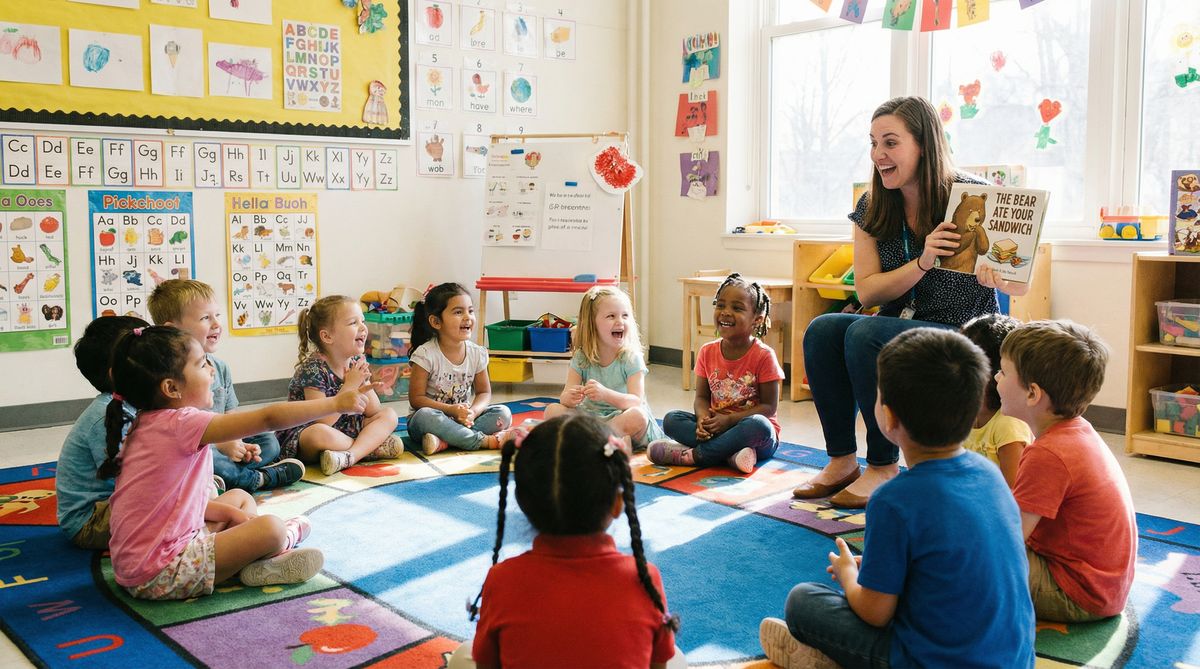
Children in circle time at a Sunshine Learning Center preschool classroom

The Real Difference Between Daycare and Preschool — And Why It Matters Less Than You Think

If you have spent any time searching for childcare in New York City, you have probably noticed the language gets confusing fast. Daycare. Preschool. Pre-K. Early learning center. Nursery school. Everyone seems to use these terms differently, and the distinctions can feel arbitrary — especially when you are a parent trying to make one of the most important decisions of your child's early life.

Here is the truth that most childcare websites will not tell you: the label matters far less than what actually happens inside the classroom. A program calling itself a "preschool" can be nothing more than glorified babysitting with a fancy name. And a "daycare" can deliver a rigorous, research-backed education that prepares your child for kindergarten better than programs charging twice the price.

So let us clear up the confusion — and talk about what you should actually be looking for.

The Traditional Definitions

Historically, the word daycare referred to programs focused primarily on supervision and care. Parents needed a safe place for their child while they worked, and the emphasis was on keeping children fed, rested, and out of harm's way. Learning happened incidentally, not intentionally.

Preschool, on the other hand, typically described a shorter-day program — maybe three or four hours in the morning — with a structured educational curriculum. The assumption was that preschool was where children learned, and daycare was where children waited.

That distinction made sense in the 1980s. It does not make sense in 2026.

Why the Old Labels Are Outdated

Modern early childhood research has fundamentally changed what we know about how young children learn. We now understand that children are building neural pathways from the moment they are born — and that the quality of their experiences during the first five years has a profound impact on everything from language development to emotional regulation to academic readiness.

This research has transformed the best childcare programs into genuine learning environments. At Sunshine Learning Center, for example, every classroom from our infant program through pre-K follows the Creative Curriculum — a nationally recognized, research-backed framework that structures the entire day around intentional learning. When a toddler in our classroom plays with water and measuring cups, that is not free time. That is an introduction to volume, cause and effect, and scientific observation. When an infant's caregiver narrates diaper changes and mealtimes, that is not small talk. That is building the language foundations that will support reading two years from now.

The point is this: a well-run, full-day program does not sacrifice education for convenience. It integrates education into every moment of the day — including meals, transitions, outdoor play, and yes, even nap time routines.

What Actually Matters When Choosing a Program

Instead of asking "Is this a daycare or a preschool?" — which tells you almost nothing about quality — ask these questions instead:

1. What curriculum do they follow?

A strong program will name a specific, research-backed curriculum. The Creative Curriculum, HighScope, Montessori, and Reggio Emilia are all well-established frameworks with decades of evidence behind them. If a program cannot clearly articulate their educational approach, that is a red flag — regardless of what they call themselves.

2. How do teachers plan their days?

In a quality program, the daily schedule is not random. Teachers create lesson plans with specific developmental objectives for each age group. Ask to see a sample weekly plan. It should reference specific skills being targeted — not just a list of activities like "art time" and "circle time."

3. What are the teacher-to-child ratios?

New York City's Department of Health mandates specific ratios for licensed programs: 1:4 for infants, 1:5 for toddlers, and 1:6 for preschoolers. But the best programs often exceed these minimums. Lower ratios mean more individual attention, which directly impacts how much your child learns and how secure they feel.

4. How do they communicate with parents?

Daily communication is non-negotiable. You should know what your child ate, when they napped, what activities they participated in, and how their day went — not in a two-sentence summary at pickup, but in real time. Apps like Tadpoles make this possible by sending parents photos, activity logs, and developmental notes throughout the day.

5. What does kindergarten readiness look like here?

A program that takes education seriously will be able to tell you exactly what skills your child will have when they graduate. That includes academic readiness — letter recognition, number concepts, early writing — but also the social-emotional skills that kindergarten teachers say matter even more: the ability to sit and listen, follow multi-step directions, manage frustration, and work cooperatively with peers.

The NYC Factor

In New York City, the daycare-versus-preschool question gets an extra layer of complexity because of the city's UPK (Universal Pre-K) and 3-K programs. These publicly funded programs provide free preschool for four-year-olds (UPK) and three-year-olds (3-K) at participating centers — including many that also operate as full-day childcare providers.

This means a child enrolled in a full-day program at a center like Sunshine Learning Center can receive a publicly funded preschool education as part of their full-day experience. The "daycare" hours before and after the educational block are not empty time — they are extensions of the learning day, filled with enrichment activities, outdoor play, and social development.

If you are a parent in East Harlem, Mott Haven, Yorkville, Harlem, or Coney Island, understanding how UPK and 3-K integrate with full-day care is essential. Many families do not realize they may qualify for subsidized or fully funded childcare through a combination of city programs and HRA vouchers. Always ask a prospective center about their funding options — a good program will walk you through everything you qualify for.

Signs You Have Found the Right Place

Forget the label. When you walk into a childcare center, pay attention to what you see and feel:

The children are engaged, not just entertained. Are kids actively doing things — building, painting, talking with teachers, exploring materials? Or are they sitting passively watching a screen or wandering aimlessly?

The teachers are on the floor, not on their phones. Quality care is hands-on. Teachers should be at eye level with children, actively participating in play and conversation, not supervising from a chair across the room.

The environment is organized and intentional. Classrooms should have clearly defined learning centers — a reading area, a block area, an art station, a dramatic play space. The materials should be age-appropriate and accessible to children. Clutter and chaos are not signs of creativity. They are signs of poor planning.

The children know the routine. Watch how children transition between activities. In a well-run program, transitions are smooth because children know what comes next. They feel safe and secure in their environment.

You feel welcome. Any program that discourages drop-in visits or makes you feel like you need an appointment to see your child's classroom should raise concerns. Transparency is the hallmark of quality. The best programs want you to see what they do — because they are proud of it.

The Bottom Line

Your child does not care whether the sign on the building says "daycare" or "preschool." What matters is whether the adults in that building are intentional about helping your child grow — cognitively, socially, emotionally, and physically — every single day.

The best programs in New York City have moved far beyond the old daycare-versus-preschool divide. They offer the full package: a safe, nurturing environment with a structured educational curriculum, delivered by trained teachers who know your child by name and care about their individual development.

That is what we strive to deliver at every Sunshine Learning Center location — from our infant rooms to our pre-K classrooms. Not because of what we call ourselves, but because of what we do for children every day.

Sunshine Learning Center operates eight locations across Manhattan, the Bronx, and Brooklyn. To schedule a tour or learn about enrollment options including UPK, 3-K, and HRA vouchers, visit sunshinenewyork.com or call your nearest center.

Explore moreBlogs & Articles

2
Min
May 12, 2026

How to Read a Daycare Inspection Report (And What the Violations Actually Mean)

Well-organized, clean preschool classroom with colorful learning areas and proper facilities

What You're Actually Looking At

The NYC DOH publishes detailed inspection records for every licensed and registered childcare facility. These aren't kept secret. They're searchable, findable, and they're yours to review. When a facility is inspected, the inspector documents compliance issues using standardized violation codes. Some violations result in immediate notices or fines. Others are minor record-keeping problems. The trick is knowing which is which.

Sunshine Learning Center, like all NYC daycare centers, is subject to these inspections. Understanding what the inspectors look for helps you ask better questions during daycare tours and makes you a more informed parent.

How to Find Your Facility's Inspection Report

Start at the NYC Department of Health childcare facility search. Visit the Sunshine Learning Center NYC locations page to find which facility you're interested in, then search the DOH database by facility name and zip code. The DOH website returns all inspections from the past three years, organized by date. Recent inspections are at the top.

Each inspection record shows:

  • Inspection Date: When the DOH visited
  • Inspection Type: Initial license, renewal, complaint-driven, or follow-up
  • Violations: Listed by code with brief descriptions
  • Remediation Status: Whether the center fixed the issue and when

Violation Categories: Critical, Major, and Minor

The DOH uses three severity levels. This is where most parents get confused, so pay attention.

Critical Violations are immediate health and safety threats. A critical violation could trigger emergency action, facility closure, or emergency orders. Examples include: improper food storage that allows bacterial growth, unsafe access to chemicals or medications, inadequate supervision leading to a child injury, or operating without a required person on staff. If you see critical violations, that's a reason to ask very specific follow-up questions at your next tour.

Major Violations are serious compliance problems but not immediate emergencies. They show systemic gaps in how the center operates. Examples: inadequate handwashing facilities, missing required health and immunization records for enrolled children, failure to follow proper sick-child protocols, or insufficient staff training documentation. Major violations require the center to file a correction plan with the DOH within a set timeframe.

Minor Violations are record-keeping, documentation, or small procedural issues that don't directly threaten child safety. Examples: missing signatures on required forms, outdated emergency contact information, filing paperwork late, or small gaps in attendance records. These are annoying for the center but don't indicate unsafe conditions.

Inspection reports group violations by category and label the severity. A facility with one or two minor violations from two years ago is normal. A facility with recurring major violations in the same area (like supervision or health screening) suggests a pattern you should investigate.

Red Flags vs. Bureaucratic Noise

Here's where honesty matters. Not all violations are created equal, and the DOH system produces some noise.

Genuine red flags:

  • Multiple critical violations in a single inspection
  • Critical violations in supervision or safety (children getting hurt because of inadequate staffing)
  • Repeat major violations in the same category (e.g., three inspections showing handwashing and hygiene violations)
  • Recent violations that haven't been resolved (you can track remediation status on the report)
  • Violations related to child welfare or abuse/neglect allegations

Bureaucratic noise:

  • Single minor violations for paperwork or documentation
  • Administrative violations that don't affect day-to-day safety (e.g., a form filed two days late)
  • Violations from three years ago that were immediately resolved and haven't recurred
  • One-time violations unrelated to the facility's core operations

Example: A facility cited for "missing emergency contact information for one enrolled child" is a record-keeping problem, probably resolved in days. A facility cited for "children observed playing unsupervised in the kitchen near an operating stove" is a critical safety failure and requires immediate explanation.

Questions to Ask During Your Daycare Tour

If you find violations on the facility's inspection report, write them down and ask about them in person. Good facilities expect this question and have clear answers. Here's how to ask:

"I reviewed your recent inspection reports. I saw [cite the violation] listed on the [date] inspection. Can you walk me through what happened and how you fixed it?"

Listen for:

  • Specific answers, not defensiveness
  • Evidence they actually resolved the problem (new equipment, new training, new process, documentation of the fix)
  • Acknowledgment of what went wrong, not excuses
  • If the violation is recent, a clear remediation timeline

If the center gets defensive, hand-waves, or can't explain a critical violation, that's a real concern. Good facilities own their problems and show how they've fixed them.

Understanding State Law: The Difference Between a Violation and a Law Break

One more important distinction: violation codes don't necessarily mean the facility broke the law. They mean the facility didn't meet the DOH's written compliance standards at the time of inspection. Standards change, interpretations evolve, and facilities can dispute violations. If you see a violation you're concerned about, you can:

  • Ask the facility for their remediation plan (they should have one on file)
  • Request documentation of how they've addressed it
  • Contact the DOH directly to ask for clarification on that specific violation code
  • Ask your pediatrician whether it's a health concern

The DOH publishes clear definitions of each violation code. If you're looking at an unfamiliar one, search the NYC DOH childcare regulations online or call the DOH bureau directly. They're happy to explain what a violation means in plain English.

The Big Picture: What These Reports Actually Tell You

Inspection reports are a data point, not a final verdict. A facility with zero violations in three years is great. A facility with minor violations that get fixed quickly shows it responds to feedback. A facility with a pattern of critical violations or violations it doesn't remediate is a real concern.

The best way to use inspection reports is as a conversation starter. They're a framework for asking smarter questions when you tour a facility. They let you check whether the center operates the way it claims.

When you visit Sunshine Learning Center for a tour, ask about recent inspections, ask about any violations you found, and watch how the staff respond. That combination of objective data and direct conversation gives you real insight into whether a facility is right for your family.

Most NYC daycare centers operate safely and professionally. The inspection process exists to keep oversight consistent and transparent. Reading these reports is your right as a parent, and using them to ask good questions is how you stay involved in your child's care. Learn more about what our holistic approach to child development means, and discover how we support families through evidence-based early learning practices.

READ ARTICLE
2
Min
May 11, 2026

What Kindergarten Teachers Wish Every Parent Knew About School Readiness

Young child reading story book in preschool classroom

Your child's kindergarten teacher isn't checking if they can read or write. Stop worrying about that.

What they're actually assessing on day one is whether your 5-year-old can sit still for 10 minutes, wait their turn, ask for help, and manage the bathroom independently. Those basic self-regulation and social skills matter infinitely more than knowing their ABCs. If your child arrives at kindergarten without them, the first month is chaos for everyone.

I've talked to dozens of kindergarten and pre-K teachers across New York City, and they're remarkably consistent: the kids who struggle aren't the ones missing academic skills. They're the ones who've never been asked to follow a routine, sit in a group, or solve a small problem themselves.

This post is what I wish every parent entering kindergarten knew, based on real feedback from teachers in NYC public schools and private institutions.

Social Skills Matter More Than You Think

The biggest shock for parents is discovering that your kid's ability to share a crayon or wait for their turn is more important than their reading level. Kindergarten teachers will teach letters and numbers. You can't teach patience and cooperation in a classroom of 20 five-year-olds if half of them don't know how to take turns.

Your child doesn't need to be a social butterfly. They just need to understand basic classroom expectations: raise your hand before speaking, wait your turn, listen when someone else is talking, and accept that sometimes they don't get what they want right now.

Preschool teaches this constantly, which is one reason teachers always recommend it. At Sunshine Learning Center, every day is structured around group play, shared activities, and learning to navigate small conflicts without a parent stepping in. Kids who attend preschool show up to kindergarten with these skills already wired in.

If your child hasn't attended preschool, focus on this during the year before kindergarten. Host playdates with other kids. Play games with simple rules (Simon Says, board games). Practice taking turns. It sounds small, but it changes everything on day one.

Independence Doesn't Look Like You Think It Does

Most parents assume independence means being away from them. The real version kindergarten teachers are looking for is different: your child can manage their own bathroom needs (getting to the bathroom, using it, washing hands, returning to class) without constant reminders.

This is it. This is the big independence skill kindergarten requires.

Your child also needs to follow a multi-step direction. "Put your coat in your cubby, wash your hands, and come sit at the table." Not three separate reminders. One direction with three steps, and they do it. If you've been saying "Go get your shoes," "Now go put them on," "Now come to the door," you're the one managing the steps. Your kid isn't practicing.

At preschools like Sunshine, classrooms are designed so kids practice independence constantly. There are picture schedules so kids know what comes next. Materials are at child height so they can grab what they need. The teacher isn't stepping in to help with every coat button. Your child is learning to do it, slowly and imperfectly.

If you're ramping up for kindergarten, back off the scaffolding. Let them struggle with the zipper. Let them figure out which shoe goes on which foot. It feels slow and inefficient, but that's the practice they need.

Emotional Regulation Is The Secret Skill No One Talks About

Here's a hard truth: kids who can't handle disappointment cause real problems in a classroom. When a kindergartener has a meltdown because they wanted the blue marker and the red one was offered instead, the teacher's entire lesson stops.

Kindergarten is full of small frustrations. Waiting for snack. Sitting while someone else reads a book. Not getting picked first. A friend won't sit next to them at lunch.

Kids who've had minimal frustration exposure hit a wall. They fall apart. And in a classroom of 20 kids, the teacher can't troubleshoot one kid's emotional crisis for 15 minutes while the rest wait.

What teachers actually want is for your child to tolerate disappointment without shutting down. That doesn't mean they're happy about it. It means they can handle it without a full meltdown. They can cry and still sit down. They can be mad and still listen to the next direction.

How do you build this? Stop trying to protect them from every frustration. Let them lose at games. Let them hear "not now" without finding a workaround. Play-based preschools are constantly teaching this because kids are negotiating with each other, losing games, waiting for their turn, and learning that disappointment isn't fatal.

Academic Skills Are Secondary (For Real)

I'm going to repeat this because parents spend so much energy on it: your kindergartener doesn't need to read. They don't need to know addition. They don't need to write their name.

Kindergarten teachers in NYC public schools specifically teach these things. These are the benchmarks the school is measured on. The teacher knows exactly how to get your child there.

What you can do is read to them. A lot. Every single day. Not the choppy, I'm-trying-to-teach-letters reads. The story reads. The long picture book reads. The chapter book reads at bedtime. Kids who've been read to extensively show up to kindergarten with bigger vocabularies and genuine interest in books. That matters. Reading skills will follow naturally.

Beyond that, let preschool do its job. If your child has attended preschool like Sunshine, they've had months of exposure to letters, numbers, writing, and early reading concepts through play. That foundation is enough.

Listening and Following Directions

This one separates the kids who cruise through kindergarten from the kids who struggle. Your child needs to listen to an instruction the first time and follow it without reminders.

This isn't natural for five-year-olds. Most require a few verbal redirects. But there's a difference between a kid who needs one "eyes here" reminder before they listen, and a kid who needs seven redirects and still doesn't hear you.

Teachers build this through explicit practice, but your child is ahead if they've already practiced it. At home, give clear, specific directions. "Go put your socks in the hamper and your shoes by the door." Not "clean up." Wait. Do they do it? If yes, move on. If no, don't repeat it 10 times. Say it once, and then help them do it. Repetition teaches that you mean what you say.

Age-Appropriate Attention Span

Five-year-olds can't sit still for 45 minutes. If your child attends kindergarten and the teacher tells you they're struggling to pay attention, it doesn't mean there's a problem. It means they're five.

Real kindergarten includes movement breaks, outdoor play, and transitions between activities. Teachers aren't expecting frozen silence. They're expecting your child to settle into an activity for 15-20 minutes and focus.

How do you build this? Read longer picture books. Let them do activities that require sustained focus (puzzles, drawing, building with blocks). Limit screen time. None of this is surprising, but it does build the neural pathways for attention.

Bathroom Independence and Self-Care

The logistics matter more than you think. Your child needs to use the bathroom safely and independently. This means they understand where the bathroom is, can manage their pants and underwear, can wipe themselves (roughly), and can wash their hands without supervision.

Accidents happen. Some kids don't have the physical maturity for complete reliability at five. That's normal. But your child should be able to attempt it without waiting for an adult to assist with every step.

Schools have specific bathroom protocols. Kids go on a schedule and in pairs for safety. The teacher will build whatever independence your child brings. But if your child has never been to a bathroom without you right there, that's worth practicing before kindergarten.

The Small Things That Actually Get Flagged

Teachers told me they note when kids arrive at kindergarten unable to:

  • Hold a pencil without death-gripping it
  • Operate a backpack or coat zipper
  • Ask for help using words
  • Notice when someone is sad or upset
  • Stand still for a group photo
  • Walk in a line (roughly)
  • Eat lunch without assistance

These aren't judgments about your parenting. They're notes about what the child hasn't practiced yet. And all of them are skills your child will develop in September. Teachers just want a heads up if something is wildly off.

What Sunshine Graduates Look Like on Kindergarten Day One

I've worked with hundreds of parents through this transition, and the ones whose children have attended preschool programs like Sunshine have a very obvious shared advantage: they're calm. Not because they're geniuses. But because they've already done this.

They've been in a classroom with 10-12 other kids. They've had a teacher who isn't their parent. They've followed a schedule that someone else set, negotiated sharing, and learned to navigate transitions. On day one of kindergarten, half of that is already familiar.

If your child hasn't attended preschool, the transition is bigger, but it's not catastrophic. Your job is just to normalize it at home. Create routines. Practice expectations. Read a lot. Let them feel frustrated without solving it.

One More Thing Kindergarten Teachers Wish You Knew

Don't prep your child with worksheets or flashcards thinking it's kindergarten practice. Your child needs play, conversation, reading, and the chance to learn through exploration. That's how kindergarten works. That's how their brain actually learns.

Show up on day one with a kid who can listen, tolerate frustration, manage their own basic needs, and genuinely love stories. Everything else is the teacher's job.

If you want to tour a preschool that intentionally builds these exact skills through play-based learning, schedule a visit to one of Sunshine Learning Center's locations across New York City. We see this transition happen every year, and we're always happy to talk through what kindergarten readiness actually looks like.

READ ARTICLE
2
Min
May 11, 2026

The First Week of Daycare: What to Expect and How to Prepare

Parents dropping off their child at daycare for the first time

The first day of daycare is a big deal. For your child, it's a flood of new faces, sounds, and routines. For you, it's a mix of excitement and worry that you're doing the right thing. The good news: kids are more resilient than you think, and daycare centers are built for this transition.

Here's what to actually expect during that first week, and how to set your child up for success.

Day 1: The Introduction

Your child will likely cry when you leave. This is normal. It doesn't mean daycare is wrong for them. It means they have a strong attachment to you, which is healthy.

Most centers recommend a short first day, 2-3 hours. Your child meets their primary teacher, sees the classroom, and starts to recognize familiar faces. Teachers are watching for cues about your child's comfort level, feeding schedule, and sleep signals.

Come back on time. If you say you're picking up at 11 a.m., pick up at 11 a.m. Consistency builds trust fast.

Days 2-3: Pattern Recognition

By day two, your child knows where they are. The classroom doesn't feel foreign anymore. They may still cry at drop-off, but they're also watching the other kids play. Some might even laugh or try to join an activity.

Teachers are starting to see your child's personality. Are they cautious? Adventurous? Do they prefer parallel play or group play? This information helps them guide the transition and let you know how your child's day went.

If your center provides progress photos or a daily report, you'll start getting those notes. It feels good to know your child ate lunch and played outside.

Days 4-7: Routine Takes Hold

By the end of the first week, drop-off becomes a script. Your child might still fuss, but it's shorter and less intense. You might even notice them getting excited about seeing their new teacher or a favorite toy.

The first week is also when you'll see the payoff of all those prep conversations. If you talked about "going to school with Miss Teacher," your child starts to recognize the routine. They're building neural pathways for this new environment.

This is the week to stick with your plan, even if it's hard. The more consistent you are, the faster your child adjusts.

How to Prepare in the Week Before

Start talking about daycare now, before day one. Use simple language: "You're going to learn and play with other kids. Miss Teacher will take care of you while I'm at work. I'll pick you up after snack time."

Read books about starting school. "The Kissing Hand" and "Llama Llama Misses Mama" are popular, but any book about routine and transition helps. Your child gets to hear the story multiple times and start building a mental model.

Visit the center if you can. Let your child see the classroom, play area, and bathrooms. Familiarity is the antidote to fear.

Practice the drop-off routine at home. You put your child down for a moment, say goodbye, and come back. Make it quick and matter-of-fact. No sneaking out. No long goodbyes that drag out the emotion.

Bring comfort items if the center allows it: a small stuffed animal, a family photo, a blanket. These are anchors to home.

What to Expect Emotionally

You will feel guilty. You will wonder if you made a mistake. You will get a text with a photo of your child laughing and feel a mix of relief and weird sadness that you weren't there.

This is normal. Most working parents feel this. It passes.

Your child might regress a little. More tantrums at home. Trouble sleeping. Clinginess in the evenings. This is their way of processing a big change. It usually settles in 2-3 weeks.

Some kids take longer. If your child is still struggling after a month, talk to their teacher. There might be a specific trigger you can address, or it might just take more time.

Red Flags vs Normal Struggles

Normal first-week stuff: crying at drop-off, not eating much the first day, being tired, wanting extra attention at home.

Things to mention to your teacher: aggressive behavior, extreme withdrawal, not eating or drinking anything, signs of illness (fever, rash, diarrhea).

If your child comes home with unexplained bruises or if you have concerns about their safety, speak up immediately. Good centers welcome questions and take concerns seriously.

Practical Tips for Success

Send labeled items. Spare clothes, diapers (if applicable), any medications. Labels save chaos on busy days.

Don't over-pack. Overwhelming your child with toys from home doesn't help. One comfort item is enough.

Pick up on time. Your child has a clock in their head. Consistency matters.

Ask specific questions at pickup. Instead of "How was your day?", ask "What did you have for snack?" or "Who did you play with outside?" Teachers can answer these better, and you get real information.

Keep home routines steady. Consistent bedtime, consistent meal schedule. When everything else is changing, routine at home is grounding.

Give the first week time. This is not when you judge whether daycare is working. Judge it after a month of data. First week is pure transition shock.

What Your Child Is Learning Right Now

Beyond academics, your child is learning huge things: how to separate from you safely, how to trust other adults, how to navigate a group, how to manage their emotions when they're uncomfortable.

These are life skills. The specific math or letter recognition can wait. The fact that your child is building resilience and confidence? That's the real win.

When you see your child light up during a group activity or show you something they made, you'll understand. This was the right move.

A Gentle Reality

Some children adjust in three days. Others need three weeks. Neither means anything is wrong. Temperament, previous experiences with separation, and the quality of their teacher relationship all affect the timeline.

If you're placing your child in a quality program with consistent, warm caregivers, you're already giving them a gift. Let the first week be what it is: hard, but important. And temporary.

If you're looking for that kind of center in New York City, take a tour. Good centers like Sunshine Learning Center invest in the transition. They know the first week is hard, and they're designed to make it easier.

Your child will be okay. And so will you.

READ ARTICLE
Become a Sunshine Teacher

Join a team that shares your passion.

Apply TODAY
Music
Language
Movement
Culture
Community
Arts
Academics
Social Skills