Baby Yoga Poses: Nurturing Connection and Development from Day One

DATE
June 3, 2025

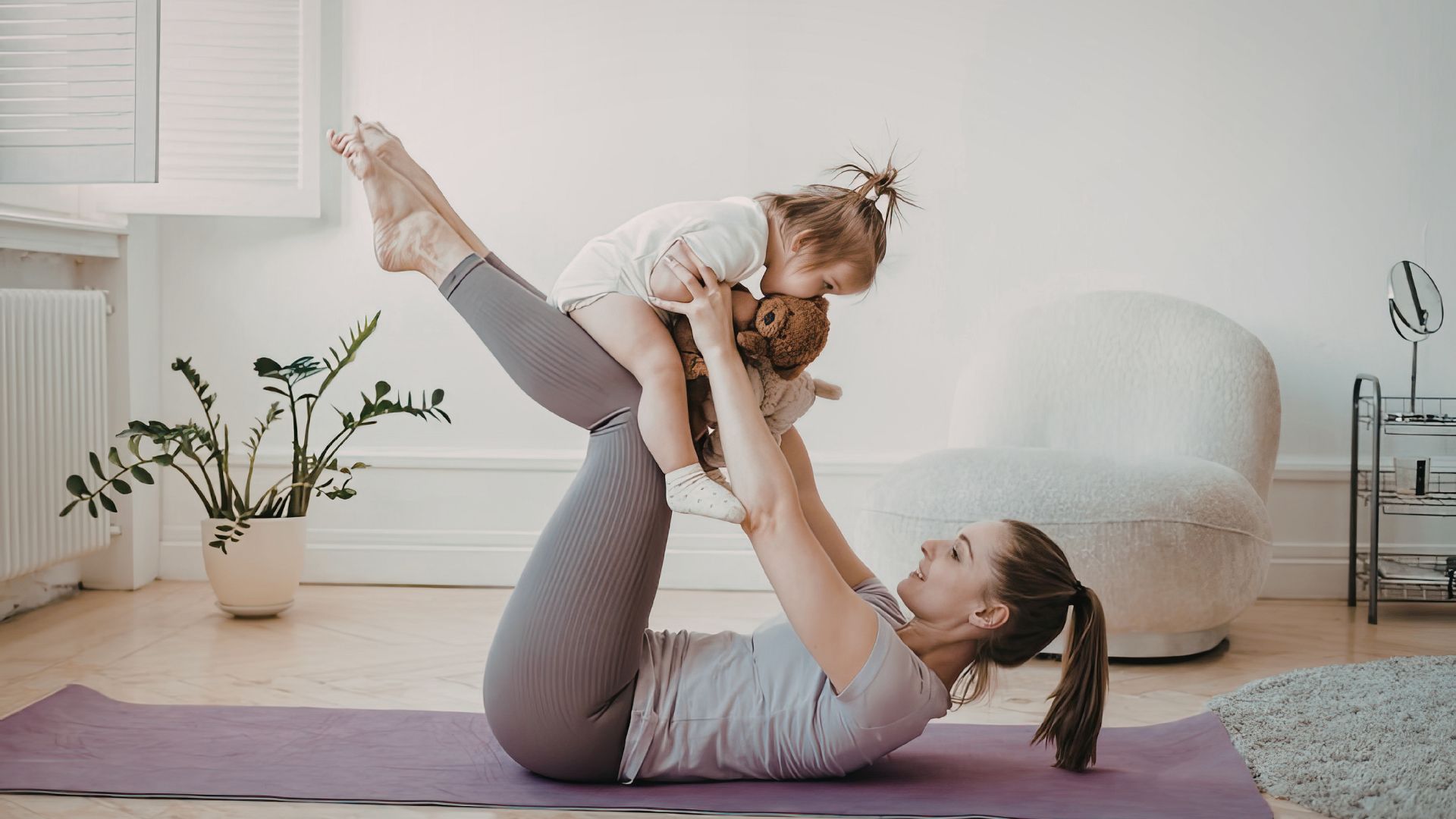
Summer is a time for making memories, and for the newest members of the family, it can also be a wonderful opportunity to introduce gentle, nurturing activities. Among these, baby yoga poses stand out as a beautiful and intimate practice. It involves moving a baby's body through a series of stretches and poses, always with the loving guidance of a parent or caregiver. More than just physical exercise, baby yoga is an intimate bonding experience that profoundly supports a baby's physical, cognitive, and emotional development from their earliest days. This gentle introduction to movement highlights how these simple interactions can foster deep connection and overall well-being.

This practice offers a unique way for parents to interact with their infants, promoting relaxation, aiding digestion, and stimulating early motor skills. By exploring various baby yoga poses, this guide will demonstrate how this activity can be a joyful and beneficial addition to any family's routine, laying a foundation for healthy growth and a strong parent-child bond.

The Foundational Principles of Baby Yoga

Baby yoga emphasizes gentle, rhythmic movements that are appropriate for an infant's developing body. It’s crucial that all movements are fluid, supported, and never forced, always respecting the baby's comfort and natural range of motion. The focus is on gentle stretches, rocking, and light massage that can be adapted as the baby grows. It's essential to always ensure the baby is well-fed, rested, and alert before starting any session, as their comfort and cooperation are paramount for a positive experience.

Key principles for successful baby yoga include starting slowly and gradually increasing the duration or complexity of movements as the baby becomes accustomed to them. Continuously observing the baby's cues—such as fussiness, disinterest, or signs of discomfort—and stopping if there's any negative reaction is critical. The environment for baby yoga should be calm, warm, and free from distractions to maximize focus and relaxation for both parent and child. Even short, consistent periods of practice, perhaps just 5-10 minutes daily, can yield significant benefits in terms of development and strengthening the parent-child bond.

Poses for Physical Development and Strength

Baby yoga poses are specifically designed to support the development of core strength, flexibility, and coordination. These foundational physical attributes are vital for a baby's progression through key developmental milestones. Movements that involve gentle leg pumps, arm stretches, and supported rotations help to strengthen the large muscles essential for rolling, sitting, crawling, and eventually walking. These actions directly aid in building body awareness and control as the baby begins to understand and master their own physical capabilities.

These initial poses lay the groundwork for major gross motor milestones, preparing the baby's body for more complex movements. They also encourage symmetrical development, which is important for balance, posture, and overall physical coordination as they grow.

"Bicycle Legs" (Leg Pumps)

This pose is a cornerstone of infant movement exercises. It involves gently holding the baby's ankles and moving their legs in a cycling motion, as if they are riding a miniature bicycle. This movement is typically performed with the baby lying comfortably on their back.

"Bicycle Legs" helps to strengthen the baby's leg muscles and improves flexibility in the hips. Crucially, this gentle motion can be very effective in relieving gas and discomfort by gently stimulating the digestive system, making it a soothing practice for fussy infants.

"Knees to Chest"

A simple yet highly beneficial pose, "Knees to Chest" involves gently bringing both of the baby's knees up towards their chest, holding for a few seconds before slowly releasing them. This can be performed with one leg at a time to isolate the stretch or with both legs simultaneously for a more comprehensive effect.

This gentle stretch is remarkably effective in relieving gas, soothing discomfort associated with colic, and increasing flexibility in the baby's lower back and hip joints. It's often a comforting and calming movement that many babies readily accept.

Supported "Airplane" (Gentle Backbend)

The Supported "Airplane" pose requires careful and secure handling. The caregiver gently holds the baby with one hand supporting their chest and tummy, and the other hand supporting their bottom or legs. The baby is then gently lifted so they are horizontal, resembling an airplane in flight. It's vital to keep their head in line with their spine to ensure proper support.

This pose gently strengthens the baby's back and neck muscles, which are crucial for developing head control and, later, for achieving milestones like sitting up independently and crawling. Additionally, this position offers a new and stimulating perspective for the baby, encouraging visual exploration and spatial awareness.

Poses for Relaxation, Digestion, and Sleep

Beyond their role in physical development, many baby yoga poses are incredibly effective for promoting relaxation, aiding digestion, and significantly improving sleep patterns. The combination of gentle pressure, rhythmic movements, and close physical contact from the caregiver can profoundly soothe a fussy baby, help release trapped gas, and calm their nervous system, leading to a more peaceful and contented state.

Incorporating these specific poses into a pre-sleep routine can serve as a powerful signal to the baby that it's time to unwind and prepare for rest. This can potentially lead to longer, more restful sleep for both the baby and the caregiver, as the calming benefits extend far beyond immediate relief.

"Happy Baby" Pose

This pose is a favorite among both babies and caregivers for its soothing qualities. While the baby is lying comfortably on their back, gently bring their knees towards their armpits, allowing the soles of their feet to face the ceiling. The caregiver then gently holds the baby's feet or ankles, ensuring their shins remain perpendicular to the floor.

"Happy Baby" pose gently stretches the hips and groin, mimicking a natural, comforting position that babies often adopt on their own. It is particularly effective in alleviating discomfort from gas or constipation, and its inherent gentle nature makes it a very relaxing experience for most infants.

Gentle Tummy Massage & Strokes

While not a traditional "pose" in the conventional sense, gentle tummy massage is an integral and highly beneficial component often integrated into a baby yoga session. Using a small amount of baby-safe oil or lotion, gently massage the baby's tummy in a clockwise direction. Alternatively, perform gentle "I Love U" strokes: stroke down the left side of the baby's abdomen for the "I," then across the top and down for the "L," and finally an inverted "U" shape for the "U."

Tummy massage is highly effective for stimulating digestion, providing relief from gas and constipation, and offering a deeply comforting and bonding experience. This physical interaction can lead to profound relaxation and significantly contribute to better sleep patterns for the baby.

Supported Forward Fold

For this calming pose, seat the baby facing you, ensuring they are well-supported. Gently support their back and allow their upper body to softly fold forward over their legs. During this pose, the caregiver can sing a soothing song, hum gently, or softly rock the baby in this position to enhance the calming effect.

This gentle compression of the abdomen, combined with the mild stretch, can help release tension in the baby's back and hips. Its gentle pressure on the digestive organs can further aid digestion and promote comfort, making it an excellent winding-down pose to prepare for rest.

Fostering Connection and Cognitive Stimulation

Beyond the physical benefits, baby yoga is a powerful tool for strengthening the bond between caregiver and infant. The dedicated one-on-one time, often involving skin-to-skin contact, sustained eye contact, and soothing vocalizations during the practice, deeply enhances attachment and creates a profound sense of security and trust. This intimate interaction is vital for a baby's emotional well-being and forms the bedrock of a positive parent-child relationship.

Furthermore, the varied movements and physical sensations experienced during baby yoga actively stimulate a baby's senses, contributing significantly to their cognitive development. As babies learn about their body in space—how it moves, stretches, and interacts with their surroundings—they build crucial neural pathways. This process improves proprioception (the sense of where one's body is in space) and enhances their understanding of cause and effect. Talking to the baby and describing the movements during the poses also supports early language development and responsiveness, as they begin to associate words with actions and physical sensations. This holistic engagement creates a rich learning environment from infancy.

Want a quick reference? Download our handy "Baby Yoga Poses" infographic for a visual guide to these beneficial movements! 

Discover Early Development & Bonding in NY

At Sunshine Learning Center, we understand the profound benefits of baby yoga poses and the incredible impact they have on early development and parent-child bonding. Our carefully designed enrichment program focuses on nurturing every aspect of your child's growth, including practices like baby yoga that support physical milestones, emotional well-being, and cognitive stimulation. 

We believe in providing experiences that build strong foundations and foster a lifelong love for learning in a supportive and engaging environment. Learn more about how your little one can thrive through our comprehensive enrichment offerings by finding a location near you to explore specific class availability!

Explore moreBlogs & Articles

2
Min
March 26, 2026

Separation Anxiety at Daycare: What's Normal and What Actually Helps

Parent dropping off child at daycare — a moment that gets easier with time

Your kid is screaming. Snot everywhere. Arms locked around your leg like a baby octopus. The teacher is gently trying to peel them off while you stand there wondering if you're a terrible person for leaving.

Sound familiar? You're not alone. Separation anxiety at daycare drop-off is one of the most common — and most gut-wrenching — experiences parents deal with. The good news: it's completely normal, it's actually a sign of healthy attachment, and it does get better.

Here's what's really going on, what's normal versus what's not, and the strategies that actually work — based on what we've seen with hundreds of families, not just what sounds nice on a parenting blog.

Why Separation Anxiety Happens (And Why It's a Good Sign)

Between about 8 months and 3 years old, kids go through a developmental stage where they become acutely aware that you exist even when you're not in the room. Psychologists call it "object permanence." Your child calls it absolute panic.

Here's the thing: separation anxiety means your child has a strong, secure attachment to you. That's exactly what you want. Kids who don't react at all to a parent leaving — that can actually be more concerning from a developmental standpoint.

The anxiety peaks between 10-18 months and again around 2 years old. If your kid just started daycare during one of these windows, you're getting hit with a double whammy: new environment plus peak clinginess. It's not your fault, and it's not the daycare's fault. It's just biology doing its thing.

What's Normal vs. What's Worth a Conversation

Totally Normal

  • Crying at drop-off for the first 2-4 weeks (sometimes longer)
  • Clinging to you, hiding behind your legs, refusing to walk in
  • Regression in other areas — sleep disruptions, extra tantrums at home, wanting a bottle again
  • Being fine all day at daycare but melting down the second they see you at pickup
  • Having good days and bad days with no obvious pattern

Worth Talking to the Teacher About

  • Crying that continues throughout the entire day, not just drop-off, after 4-6 weeks
  • Refusing to eat or drink at daycare consistently
  • Physical symptoms like repeated vomiting or diarrhea that only happen on daycare days
  • Extreme behavioral changes at home that aren't improving over time
  • Your child seeming genuinely afraid (not just sad) about going

The key word is "over time." Most kids settle in within 2-6 weeks. Some take longer, especially if they've never been in group care before. If you're at week 8 and things aren't improving at all, that's when to have a deeper conversation with the teachers and possibly your pediatrician.

The Drop-Off: What Actually Works

Build a Goodbye Ritual

Kids live for routine. A predictable goodbye ritual gives them a sense of control over an otherwise overwhelming moment. It doesn't have to be complicated:

  • Two hugs, a high-five, and "See you after snack time"
  • A special handshake
  • Looking out the window together and waving
  • Drawing a heart on each other's hands (the "kissing hand" trick actually works for a lot of kids)

The ritual should take under a minute. Longer goodbyes don't help — they give anxiety more room to build.

Keep It Short and Confident

This is the hardest part. Your kid is crying and every cell in your body is screaming "STAY." But dragging out the goodbye — coming back for one more hug, hovering by the door, looking through the window with tears in your own eyes — makes it worse.

Kids read your energy like a book. If you seem nervous or unsure, they think: "Wait, should I be worried? Mom looks worried. THIS MUST BE DANGEROUS." If you seem calm and matter-of-fact, they get the message that this is safe, even if they don't love it.

Say goodbye, tell them when you'll be back in terms they understand ("after nap time" beats "at 5:30"), and walk out. The teachers have this. That's literally their job.

Never Sneak Out

We get it — it's tempting. They're distracted by the train table, you could just... slip away. Don't. When your child realizes you disappeared without warning, it doesn't prevent a meltdown. It creates a bigger one, plus it erodes their trust. Now they're not just sad you left — they're anxious you might vanish at any moment.

Always say goodbye, even if it triggers tears. Predictability builds security.

What Teachers Do After You Leave

Here's a secret that might help: most kids stop crying within 5-10 minutes of drop-off. Seriously. Ask any daycare teacher and they'll tell you the same thing. The transition moment is the hard part. Once you're gone and the classroom routine kicks in, kids get pulled into activities pretty quickly.

Good teachers have a whole toolkit for this:

  • Redirecting to a favorite activity immediately
  • Offering comfort items (a special stuffed animal that lives at school)
  • Pairing anxious kids with a confident buddy
  • Giving them a "job" — being the helper who feeds the fish or passes out napkins
  • Sitting with them one-on-one until they're ready to join the group

At Sunshine Learning Center, our teachers in the toddler and twos classrooms are especially tuned into this. They've seen every flavor of separation anxiety and they know how to meet each kid where they are. But this is true at any quality daycare — experienced teachers aren't rattled by tears at drop-off. They expect them.

What You Can Do at Home

Practice Short Separations

If daycare is your child's first time away from you, the adjustment is going to be steeper. Before starting — or even during the first few weeks — practice separations in low-stakes environments. Leave them with a grandparent for an hour. Drop them at a friend's house for a playdate. Go to the grocery store alone while your partner stays home.

Each time you leave and come back, you're proving the most important lesson: you always come back.

Talk About Daycare Positively (But Don't Overdo It)

Mention daycare casually and positively. "Tomorrow you get to see your friend Marcus!" or "I wonder what you'll build in the block area today." Don't turn it into a sales pitch — kids can smell desperation. Just weave it into normal conversation so it feels like a regular part of life, not a big scary event.

Read the Room on Comfort Objects

Some daycares allow a small comfort item from home — a family photo, a little stuffed animal, a blanket. If yours does, use it. A transitional object gives kids a tangible piece of "home" to hold onto. Check with your center's policy first — NYC DOH regulations mean some items may need to stay in cubbies rather than nap areas.

Don't Interrogate at Pickup

"What did you do today? Did you cry? Were you sad? Did you miss me? Did you eat? Who did you play with?" Chill. Your kid just had a full day of stimulation and social interaction. Give them a hug, tell them you missed them, and let the details come out naturally — usually at the most random times, like in the bath three days later.

The Pickup Meltdown: Why They Lose It When They See You

You walk in. Your child was happily playing. They see you and immediately burst into tears. What gives?

This is actually a compliment, even though it doesn't feel like one. Your child held it together all day — used their coping skills, followed the routine, managed their emotions. The second they see you — their safe person — all that effort releases. It's like how you hold it together during a stressful work day and then fall apart on the couch at home.

It doesn't mean they had a bad day. It means they feel safe enough with you to finally let go. Give them a few minutes. They'll regulate.

When One Parent Has It Harder

In a lot of families, drop-off is dramatically worse with one parent than the other. Usually (not always) it's harder with the primary caregiver — the person the child spends the most time with. This doesn't mean the other parent is less loved. It means the child has identified their "safe base" and separating from that base is harder.

If this is your situation, try having the "easier" parent do drop-off for a while. It's not a failure — it's a strategy. Use whatever works.

A Realistic Timeline

Every kid is different, but here's what a typical adjustment looks like:

  • Week 1: Rough. Lots of tears, possibly at drop-off AND throughout the day. This is peak hard.
  • Weeks 2-3: Crying at drop-off but recovering faster. Starting to engage with activities and other kids. Still clingy at pickup.
  • Weeks 3-4: More good days than bad. Might still cry at drop-off but it's shorter. Teachers report they're participating and even laughing.
  • Weeks 4-6: Drop-off tears are rare or brief. They have a routine, maybe a friend. Walking in on their own.
  • Occasional regressions: After weekends, holidays, sick days, or big changes at home. This is normal and temporary.

Some kids breeze through in a week. Some take two months. Neither timeline means anything about your child's temperament, your parenting, or the quality of the daycare.

What to Ask the Daycare

You don't have to white-knuckle this alone. Good daycares expect these questions and are happy to answer them:

  • "How long does the crying typically last after I leave?"
  • "Can you send me a photo or update mid-morning for the first week?"
  • "What's your approach when a child is really struggling to settle?"
  • "Is there anything I can do differently at drop-off?"
  • "How will you let me know if the anxiety isn't improving?"

Any center that gets defensive about these questions is a red flag. Transparency about how your child is doing — especially during the transition period — is a baseline expectation.

The Part Nobody Talks About: Your Anxiety

Let's be honest for a second. Separation anxiety isn't just a kid thing. Plenty of parents — especially first-time parents — are dealing with their own version of it. Guilt about going back to work. Fear that something will happen. Worry that your child will feel abandoned. Comparison with other parents whose kids "adjusted right away."

All of that is valid. And all of it is worth talking about — with your partner, a friend, a therapist, whoever. The transition to daycare is a big deal for the whole family, not just the kid. Give yourself the same grace you'd give your child.

If you're looking for a daycare that takes the adjustment period seriously — where teachers actually know your kid's name and communicate with you daily — you can schedule a tour at any of Sunshine Learning Center's NYC locations at sunshinenewyork.com. We've walked hundreds of families through this exact transition, and we'll walk yours through it too.

READ ARTICLE
2
Min
March 26, 2026

What Is the Creative Curriculum (And Why Does It Matter for Your Child)?

You're touring preschools. A teacher mentions: "We use the Creative Curriculum."

You nod knowingly. But internally, you're wondering: What is that? Is it better than other curriculums? Should I care?

Here's the truth: Yes, you should care. Not all curriculums are created equal. And understanding what your child will be learning - and HOW they'll learn - is one of the most important decisions you make as a parent.

At Sunshine Learning Center, we use the Creative Curriculum. Today, we're breaking down what it is, why it works, and what you can expect when your child learns this way.

The Short Answer

The Creative Curriculum is a play-based, child-directed approach to early childhood education.

Instead of teachers lecturing or drilling facts, children learn through:

  • Play (structured and free play)
  • Exploration (hands-on discovery)
  • Problem-solving (figuring things out)
  • Following their interests (what excites them)
  • Social interaction (learning WITH other kids)

The teacher's job isn't to deliver information. It's to create an environment where learning happens naturally.

The Longer Explanation (Because It's Interesting)

Where Did Creative Curriculum Come From?

The Creative Curriculum was developed in the 1980s by Diane Trister Dodge, an early childhood education expert. She was frustrated with how many preschools taught kids - mostly with worksheets, rote memorization, and sitting still.

She asked a revolutionary question: What if we let kids learn the way kids actually learn?

Kids learn by doing, experimenting, playing, and exploring. They don't learn by sitting at a desk copying letters for 45 minutes.

Dodge created a framework that put this principle into practice. And decades later, it's still one of the most respected, research-backed approaches to early childhood education.

What Makes It Different From Other Curriculums?

Traditional approach (older model):

  • Teacher decides what everyone learns today
  • Everyone does the same activity
  • Focus: academic skills (letters, numbers, colors)
  • Assessment: can they recite the ABC song?

Creative Curriculum approach:

  • Children's interests drive the learning
  • Multiple activities simultaneously (kids choose)
  • Focus: whole child development (academic, social, emotional, physical)
  • Assessment: can they APPLY what they learned in real situations?

Example:

  • Traditional: "Today we're learning about bugs. Everyone color this ant worksheet."
  • Creative Curriculum: Set up a bug exploration station (real bugs, magnifying glasses, bug books). Let kids explore. When they ask questions ("Why do ants work together?"), THAT's when you teach about insects, social structures, teamwork - through their curiosity.

The kid who wasn't interested in bugs yesterday? They might become fascinated when they discover a real ant trail. The same worksheet wouldn't have hooked them.

The Four Pillars of Creative Curriculum

Creative Curriculum is built on four foundational ideas. Understanding these helps you see what your child is actually learning every day.

1. Children Develop Holistically (Not Just Academically)

Your child isn't just a brain in a small body. They're:

  • Physical learners (building gross/fine motor skills)
  • Emotional beings (learning to express and manage feelings)
  • Social creatures (figuring out friendships and empathy)
  • Cognitive thinkers (solving problems, asking questions)
  • Creative minds (expressing ideas through art, music, movement)

A preschool that only focuses on ABCs is ignoring 80% of your child's development.

In the Creative Curriculum classroom, a simple play scenario teaches ALL of this:

Example: Sand and water table

  • Physical: Pouring, scooping, hand-eye coordination (fine motor)
  • Cognitive: "If I pour faster, does it flow differently?" (problem-solving, cause-and-effect)
  • Social: "Can we build a sandcastle together?" (sharing, collaboration)
  • Emotional: Managing frustration when the sand castle collapses, celebrating when it works
  • Creative: "What if we add shells and make a mermaid world?" (imagination)

One activity. Multiple kinds of learning. That's the power of Creative Curriculum.

2. Play Is the Primary Vehicle for Learning

You might think: "Preschool is for learning. Shouldn't they spend more time on academic skills?"

Here's what neuroscience says: Play IS how young kids learn best.

When a child plays, their brain is:

  • Making neural connections (building brain pathways)
  • Practicing problem-solving (what happens if I do this?)
  • Developing impulse control (taking turns, waiting)
  • Building memory (repeating behaviors, learning patterns)
  • Processing emotions (acting out scenarios safely)

A child who spends 2 hours playing in a preschool classroom learns more than a child doing worksheets for 2 hours.

In a Creative Curriculum classroom:

  • Block building teaches spatial reasoning, planning, collaboration
  • Dramatic play (playing house, store, doctor) teaches social skills and language
  • Art teaches creative expression, fine motor skills, decision-making
  • Outdoor play teaches risk assessment, physical confidence, scientific observation

3. Teachers Are Facilitators, Not Lecturers

This is a big shift from traditional school models.

Traditional teacher role: "I teach. You learn."

Creative Curriculum teacher role: "I create the environment. I observe. I ask questions that help you discover."

A teacher using Creative Curriculum:

  • Watches what children are interested in
  • Asks open-ended questions ("What would happen if...?" "How could we...?")
  • Suggests materials or ideas (without directing)
  • Follows the child's lead in conversations
  • Documents learning through observation
  • Adjusts the classroom based on children's interests

Example:

A child builds a tall tower with blocks. It topples.

  • Directive teacher: "You knocked it down. Let's sit down for circle time."
  • Creative Curriculum teacher: "Your tower fell! What made it topple? What could make it stronger? Would wider blocks help? Want to try again?"

The second approach teaches problem-solving, persistence, and scientific thinking.

4. Assessment Is Ongoing and Observational (Not Test-Based)

You won't see your preschooler taking tests in a Creative Curriculum classroom. There's no "final exam" for knowing the alphabet.

Instead, teachers are constantly:

  • Observing what children do and say
  • Taking notes on skills they see developing
  • Photographing/recording learning moments
  • Identifying interests and strengths
  • Planning next steps based on individual children

What this means for you as a parent:

  • You get detailed, narrative descriptions of your child's learning (not just "doing well")
  • Teachers know YOUR child, not a checklist
  • Learning is personalized to your child's pace

What Your Child Actually Learns in a Creative Curriculum Preschool

Parents often worry: "If they're just playing, will my child learn their ABCs?"

The answer is yes - and so much more.

By age 4-5, children in Creative Curriculum classrooms typically have:

Academic Skills

  • Letter recognition and phonemic awareness
  • Counting, number concepts, basic math
  • Early writing skills (scribbles, letters)
  • Vocabulary expansion

Social-Emotional Skills

  • Ability to follow classroom routines
  • Cooperation and turn-taking
  • Expressing emotions verbally
  • Making friends and resolving conflicts
  • Confidence and self-regulation

Cognitive Skills

  • Problem-solving abilities
  • Cause-and-effect thinking
  • Memory and recall
  • Following multi-step directions
  • Creative and flexible thinking

Physical Skills

  • Coordination, balance, strength
  • Fine motor skills (holding pencils, using scissors)
  • Body awareness and confidence

Important note: The Creative Curriculum isn't just academic prep. It's whole-child development. Your child will be smarter, more confident, more emotionally intelligent, and more creative. The ABCs are just one small part of that growth.

Is Creative Curriculum Right for Your Child?

The short answer: Yes, probably.

Creative Curriculum works for most children. It's flexible enough to accommodate different learning styles and paces.

Your child might particularly thrive if:

  • They're naturally curious and ask lots of questions
  • They learn best by doing (hands-on kids)
  • They have a strong personality and opinions
  • They're creative or artistic
  • They've shown independence or self-direction
  • They need movement and active play to stay engaged

Your child needs careful implementation if:

  • They struggle with unstructured environments (need more boundaries)
  • They have sensory sensitivities (classrooms can be overstimulating)
  • They have autism or ADHD (Creative Curriculum CAN work, but needs thoughtful structure + communication with teachers)
  • They're extremely shy or anxious (they may need smaller group transitions)

Reality check: Even if your child "needs more structure," Creative Curriculum classrooms DO have structure. It's just not rigid. Structure comes from routines, clear boundaries, and predictable patterns - not from sitting at desks. Good Creative Curriculum teachers know how to balance open-ended learning with enough structure that all kids feel secure.

Questions to Ask When You Visit a Creative Curriculum Preschool

If you're touring a school that uses Creative Curriculum, ask:

1. How is the day structured?

  • What's the balance of free play vs. directed activities?
  • What are your daily routines?
  • How much time outside?

2. How do you assess learning?

  • Do you take observations/photos?
  • Do parents get regular updates on learning?
  • How do you identify when a child needs help?

3. What happens with children who struggle with play-based learning?

  • How do you support kids who need more structure?
  • How do you handle anxious kids?
  • Do you modify activities for different learning styles?

4. How do parents stay involved?

  • How often do we get updates?
  • Can we volunteer or observe?
  • How do you communicate about our child's day?

5. What about academics?

  • How do kids learn letters and numbers?
  • When do you introduce writing/reading?
  • Do you send home worksheets or homework?

The Bottom Line

The Creative Curriculum isn't a shortcut or a "just play" approach. It's a research-backed, intentional framework for how young children develop.

Your child WILL learn their ABCs, count to 20, and recognize their name. But they'll also develop confidence, creativity, social skills, and a love of learning.

That's not just preschool. That's the foundation for a lifetime learner.

A Note on Implementation

Here's the important part: Creative Curriculum is only as good as the teachers implementing it.

A poorly executed Creative Curriculum classroom looks like chaos. A well-executed one looks like organized learning disguised as play.

When you visit a preschool, observe:

  • Do the teachers interact with kids or just supervise?
  • Do kids have choices and agency?
  • Is there a balance of structure and freedom?
  • Do kids look engaged and happy?
  • Do teachers ask questions or give commands?

The curriculum is important. But great teachers matter more.

About Sunshine Learning Center

We've designed our classrooms around Creative Curriculum principles because we believe in whole-child development. Your child won't just learn facts here. They'll develop curiosity, confidence, and a genuine love of learning.

Ready to experience our Creative Curriculum classroom? Schedule a tour at your neighborhood location →

READ ARTICLE
2
Min
March 26, 2026

Your Child Has Separation Anxiety (And That's Completely Normal)

You drop your kid at preschool. They cry. They hold onto your leg. A teacher gently pries them away. You feel like the world's worst parent as you walk out.

Stop. You're not a bad parent. Your kid isn't broken.

What you're witnessing is separation anxiety - one of the most normal, universal experiences of early childhood.

At Sunshine Learning Center, we've watched thousands of parents navigate this exact moment. And we've learned something important: separation anxiety isn't a problem to solve. It's a feeling to understand and work through.

Today, we're talking about what separation anxiety actually is, why it happens, and what you can do to help your child (and yourself) through it.

What Separation Anxiety Actually Is

Separation anxiety is the fear that something bad will happen if you're apart from your child.

Wait, no. Let me rephrase.

Separation anxiety is the fear YOUR CHILD has that something bad will happen if they're apart from YOU.

It's not rational. It's not because they're clingy or spoiled or unprepared. It's because, developmentally, your child's brain is learning:

  1. Object permanence (you still exist when they can't see you)
  2. Cause and effect (if I cry, my parent comes back)
  3. Time and waiting (how long until they return?)

All of this is NORMAL brain development. In fact, if your toddler doesn't show some separation anxiety between 8-24 months, that's unusual.

The peak? Ages 2-3. Right when many families are considering preschool.

Timing is cruel.

The Separation Anxiety Timeline

Here's what's developmentally normal at each age:

6-8 months: Your baby realizes you're a separate person. Stranger anxiety begins. Babies cry when you leave the room.

12-18 months: Full-blown separation anxiety. Your toddler follows you everywhere. Bedtime battles. Drop-offs are rough.

18-24 months: Anxiety peaks. Your child may start understanding simple time concepts ("Mommy back soon?"). Some anxiety begins to ease.

2-3 years: Still anxious about separation, but increasingly able to:

  • Understand you're coming back
  • Accept comfort from another caregiver
  • Self-soothe or distract themselves
  • Use words: "Come back?" "You sad?" "Miss you?"

3-4 years: Anxiety usually significantly decreases. Many kids transition to preschool smoothly during this window (though not all).

Why does this matter? Because understanding where your child is developmentally helps you know: Is this anxiety normal? Or is something else going on?

Red Flags vs. Normal Anxiety

Normal separation anxiety looks like:

  • Cries when you leave
  • Takes 5-15 minutes to calm down
  • Engages with activities once distracted
  • Recovers quickly when you return
  • Progressively gets easier over weeks/months

Possible red flags (talk to your pediatrician):

  • Panic-level distress that lasts hours
  • Never engages with activities or caregivers
  • Physical symptoms (refusing to eat, regression, nightmares)
  • Doesn't improve after weeks of consistent preschool
  • Anxiety shows up in all separations (not just preschool)

Real talk: Most kids fall into the "normal anxiety" category. But if your kid falls into the red flags, that's not a failure - that's important information to share with your pediatrician.

What *Actually* Helps (Evidence-Based Strategies)

1. Practice Separations Before Preschool

Your kid's first preschool experience shouldn't be their first experience being away from you.

Practice:

  • Playdates (short, then progressively longer)
  • Babysitter (start with 30 min, build up)
  • Grandparent visits (even if you're in the next room)
  • Library storytimes, music classes, gym

Why? Each small separation gives your child data: "I was separated. Mom came back. It was okay."

The more data points they have, the calmer the actual preschool transition.

2. Develop a Goodbye Ritual (And Stick to It)

The ritual:

  • Hug and kiss
  • Specific phrase ("Mommy is going to work. I'll be back after snack time.")
  • Wave goodbye
  • Leave (don't sneak out!)

Make it consistent. Same words. Same ritual. Every single time.

Why? Predictability is calming. Your child learns: "Goodbye means Mom comes back. Always."

Pro tip: Avoid:

  • Extended goodbyes ("One more kiss! One more hug!")
  • Returning because they cry (teaches them: cry = parent returns)
  • Sneaking out (teaches them: people disappear without warning)

3. Use Simple Language About Time

Your 2-year-old has no concept of "I'll pick you up at 1:00 PM." But they DO understand:

  • "After snack time"
  • "After playground"
  • "After three songs"
  • "When the sun is in a different spot"

Using these landmarks: "I leave now. You have snack time. Then playground. Then Mommy comes back."

Your child can visualize: snack, playground, return. That's manageable.

4. Bring a Comfort Item (But Use It Strategically)

A stuffed animal, special blanket, or photo of you can help. But here's the key:

Don't use it as a substitution. Use it as a bridge.

Instead of: "Teddy will make you feel better," try:

"When you miss Mommy, you can hug Teddy and remember: Mommy always comes back."

The goal is to help your child self-soothe - not to replace you with an object.

5. Make Preschool Positive (No Pressure)

Before preschool:

  • Read books about preschool
  • Talk about the fun things ("You'll paint! You'll play outside!")
  • Never use preschool as a threat ("If you don't listen, you're going to time-out at preschool!")

After preschool:

  • Ask open-ended questions ("What did you do?" not "Did you have fun?")
  • Listen without judgment
  • Validate feelings ("You missed Mommy? That's okay.")
  • Celebrate small wins ("You played with blocks! That's great!")

What NOT to Do (Even Though It's Tempting)

Don't Sneak Out

I know. Your child is playing happily. You think: "If I just slip out, they won't cry."

This backfires. Your child learns: People disappear without warning. Trust erodes. Next time, they cling harder.

Do the goodbye ritual instead. They cry. It's rough. But they learn: separations have a ritual, and I come back.

Don't Give Extended Reassurance

"It's okay, sweetie. You're safe. Mommy is coming back. I promise. You're so brave. You're going to have fun. Don't cry. It'll be okay."

This teaches: Your child should be anxious (why else would you reassure so much?).

Instead: Brief, confident goodbye. "Mommy is leaving. See you after snack. Bye!"

Don't Delay Going Back to Preschool

If preschool is a bad experience, obviously pause. But if it's just normal separation anxiety?

Consistency matters more than comfort. The more days your child goes, the faster anxiety decreases.

Missing weeks resets the progress.

Don't Compare Your Child to Others

"Jessica doesn't cry at drop-off. Why does mine?"

Because every kid is different. Some have temperament that makes separation harder. Some have experienced trauma. Some are just wired more anxiously.

Your child's anxiety is real. It's valid. And with consistency, it will improve.

How Preschools Can Help

When you're touring preschools, ask:

How do you handle separation anxiety?

  • Do you have a transition period?
  • Can parents stay for a few minutes?
  • Do you call if kids are still distressed after drop-off?

What's your philosophy on goodbyes?

  • Do you encourage quick goodbyes or extended ones?
  • Do you allow "sneak-outs" or insist on rituals?

What do you do when a child is crying?

  • How quickly do you distract/engage them?
  • Do you comfort with words, activities, or both?
  • Do you pressure them to "be brave" or validate their feelings?

Red flag: A school that says, "Just leave. Don't say goodbye. They cry less if you sneak out."

Green flag: A school that has a goodbye ritual, engages your child quickly after you leave, and gives you updates throughout the day.

The Light at the End of the Tunnel

Here's what we tell every parent in the throes of separation anxiety:

This phase ends.

It might take weeks. It might take a few months. But separation anxiety is not permanent. Your child will eventually understand:

  • You come back
  • They survive without you
  • Preschool is safe
  • Other adults can care for them

The first drop-off is the hardest. The second is slightly easier. By week three, you'll see a shift.

And one day - maybe in 6 weeks, maybe in 6 months - you'll drop them off and they'll wave goodbye without crying. They might even be excited to go.

That moment will sneak up on you. And you'll feel oddly sad and proud at the same time.

A Note for Parents

Separation anxiety is your child's anxiety. But if we're being honest, it triggers your anxiety too.

You feel:

  • Guilty for "leaving" them
  • Worried they're suffering
  • Second-guessing whether preschool is right
  • Frustrated at drop-off drama

This is normal. Your feelings are valid.

But here's the secret: Your child is more resilient than you think. And staying calm at drop-off (even if you're spiraling inside) helps them stay calm too.

Fake it till you make it:

  • Confident tone ("I'll be back soon!")
  • Smile (they read your face)
  • Don't linger (extended goodbyes = extended anxiety)
  • Trust the teachers (they know what they're doing)

Your child will be okay. Better than okay. They'll thrive.

And you'll survive drop-off. Each time gets easier.

Bottom Line

Separation anxiety is one of the most universal experiences of early childhood. It's not a problem with your parenting. It's not a sign your child isn't ready for preschool (usually).

It's just a phase.

With consistency, predictability, and patience, your child will learn the most important lesson: You always come back.

And one day - sooner than you think - they'll be the one saying goodbye to you.

About Sunshine Learning Center

Sunshine Learning Center supports families through every transition, including separation anxiety. Our experienced teachers know how to help children feel safe while learning independence. Every child's emotional needs matter to us.

Ready to visit? Schedule a tour at your neighborhood location and talk to our teachers about separation anxiety →

READ ARTICLE
Become a Sunshine Teacher

Join a team that shares your passion.

Apply TODAY
Music
Language
Movement
Culture
Community
Arts
Academics
Social Skills